Showing posts sorted by relevance for query walter mosley. Sort by date Show all posts

Wednesday, June 15, 2016

#BookReview: CHARCOAL JOE by Walter Mosley

A few years and a few books ago, Walter Mosley toyed with the idea of killing off his most famous character. I’m so glad that he had a change of heart because Easy Rawlins is one of my favorite characters in the literary realm, and not just because I still picture him as the smooth talking chocolate man Denzel portrayed in Devil in a Blue Dress. Easy is a thinking man’s man and a lady’s man.

This new chapter in his life finds Easy at the advent of a new business venture. He’s partnered with two other “detectives,” Saul Lynx and Whisper Natly, two men who know and are known in the streets as well as he is. Before Easy can get comfortable in his newly formed partnership, his old friend Mouse knocks on his door with an offer he can’t refuse. And actually, Easy would have refused if it had been anyone other than Mouse asking.

As Easy cruises the streets of LA looking for a missing college student, at the request of Charcoal Joe via Mouse, he runs across a variety of characters that typically round out any Walter Mosley book. However, you’re in for a treat if you’ve read other Mosley series because he brings in the one and only Fearless Jones. If you’ve read the Fearless series, you already know that he’s an unassuming man, a quality that causes his opponents to underestimate him. But Fearless is a quick thinker and he’s nice with his hands, two qualities that Easy needs if he’s going to find Seymour Brathwaite and get him back home to his mother, Jazmine, and her benefactor, the infamous Charcoal Joe.

I love Easy, but I LOVE Fearless and my heart did a little squeal when I realized they were going to be working together on this case. Occasionally, Mosley brings characters from other books into the picture, but they play bit parts. For example, Brawly Brown from an Easy novel written 15 years ago pops up in Charcoal Joe, but only for a minute. Reference is made to Paris Minton, Fearless’ partner in crime, but we don’t see him in the book. So I was excited to find that Fearless would be in the picture for a great deal of the story. The only character missing from what I would consider to be Mosley’s great triumvirate is Socrates Fortlow, the ex-con that Mosley introduced readers to back in the late 1990s. Each man is a great character in his own right, but when they come together, you just know something is about to jump off and whatever it is, they’ll be able to handle it.

320 p.
Published: June 2016
Disclaimer: Copy of book received from publisher, opinions are my own.

Amazon | B & N | Book Depository | IndieBound

Monday, May 13, 2013

#BookReview: Little Green: An Easy Rawlins Mystery - Walter Mosley

When he went over a cliff in Blonde Faith, most readers thought they'd never seen Easy Rawlins again.  It's been quite awhile since we last heard about Easy, so our fears were founded.  Never fear, six years later, Mosley has brought Easy back to his legion of fans and he's better than ever.

While we may have thought Easy was a goner, his best friend, the quick-tempered and quick thinking Mouse, knew Easy was still alive.  And thanks to the wisdom of Mama Jo, he knew just where to find him.  (Speaking of Mouse, Don Cheadle played the role so well in Devil in a Blue Dress, that I forgot Mouse was supposed to be a "light-skinned and light-eyed" man.)  And now that Easy is somewhat recovered, Mouse has his next case lined up.

Evander "Little Green" Noon has gone missing.  Neither his name nor his family is familiar to Easy, but Mouse is all het up about finding this manchild, so Easy gets up from his sick bed to do just that.  In a side of Los Angeles that we've not seen in previous Easy Rawlins' books, Walter Mosley introduces readers to the hippie culture on the Sunset Strip.  Along with the hippies comes the world of acid droppers and drug dealers, parts of the ever evolving 1960s.  It's a city and culture that Easy doesn't recognize, but brings him to the realization that the world he knows is changing much faster than he thought and he needs to change to keep up with it.

As in past Rawlins' stories, Mosley's black characters are almost always part of the Great Migration.  Most of us know that southern blacks migrated to places like Chicago, Detroit and St. Louis in search of factory jobs between 1910 and 1970, a great number of them migrated to California, with most coming from Texas, Alabama, Louisiana and Mississippi.  As large and sprawling as Los Angeles is, these migrants stayed connected, creating their own unique communities.  Mosley plays upon this and reminds us of it it when Mouse and Easy call upon friends like Mama Jo from Louisiana or Martin Martins from Mississippi to assist them in finding the son of another migrant.

I remember being upset with Walter Mosley when I read Blonde Faith, essentially killing off Easy.  I've read his other books in the meantime, but I've never been as fascinated with characters like Leonid McGill.  And if there was one character other than Easy that I've always wanted him to bring back, it's Socrates Fortlow from Always Outnumbered, Always Outgunned.  Though I understood that as an author he might have been bored with the Rawlins character and wanted to work on other characters and pursue other things, I felt like there was still life left in the series.  Apparently Mosley has decided there is too and has already written a follow up to Little Green called Rose Gold.  I'm already anticipating Easy's next adventure.


304pp
Published: May 2013
Disclosure: Copy of book received from publisher, opinions are my own.

 
Theme: Higher and Higher by Jackie Wilson

Monday, May 12, 2014

#BookReview: Debbie Doesn't Do It Anymore by Walter Mosley


"How do you know I read?" I asked.  I never talked about books to anyone except my therapist and that one arrogant literature professor." 
"Theon told me.  I asked him did he get jealous with you havin' sex with all those young men and he said that it was only the books made him turn green.  He said that he always felt like he was about to lose you when you were lookin' in a book."


Synopsis: In this scorching, mournful, often explicit, and never less than moving literary novel by the famed creator of the Easy Rawlins series, Debbie Dare, a black porn queen, has to come to terms with her sordid life in the adult entertainment industry after her tomcatting husband dies in a hot tub. Electrocuted. With another woman in there with him. Debbie decides she just isn't going to "do it anymore." But executing her exit strategy from the porn world is a wrenching and far from simple process.

Review: Much like other characters created by Walter Mosley, such as Easy Rawlins, Socrates Fortlaw or Leonid McGill, Debbie Dare is on a journey to change who she is.  No longer satisfied with performing in front of the camera for millions to enjoy at home, she makes the decision to walk away from the world of porn.

While I was fascinated with her calculated ways, there was nothing distinctly feminine about Debbie.  Had Mosley not given her the name of Debbie or assigned a gender, I could have very well been reading about one of his male characters that I mentioned earlier.  I can't recall if this is the first book Mosley has approached from the female point of view, but my other thought is that perhaps he didn't mean to make her so masculine, but more unfeeling.  You would imagine that in Debbie's world, she's seen and come across a lot of unsavory characters and situations.  So perhaps the cold and unfeeling attitude that she affects is not a masculine one, but one of someone that has simply seen too much and is unfazed by things that would prompt reaction from others.  That's not to say Debbie is completely unfeeling.  She has a great deal of affection and respect for her doctor and another gentleman she becomes acquainted with following Theon's death.  More than anything, she keeps her distance from those she isn't sure she can trust.

Overall, I really enjoyed the book.  I felt like the ending was somewhat rushed after dragging out the time between Theon's death and the actual funeral.  I'd be much more interested in reading about what post-porn Debbie is up to these days.


272pp
Published: May 2014
Disclaimer: Copy of book received from publisher, opinions are my own.

Wednesday, September 27, 2017

#BookReview: TO FUNK AND DIE IN LA by Nelson George

Summary: To Funk and Die in LA, the fourth book in the D Hunter crime-fiction series, brings the ex-bodyguard to the City of Angels on a very dark mission when his grandfather, businessman Daniel "Big Danny" Hunter, is shot dead in a drive-by. Why would someone execute a grocery store owner? D soon finds there was more to Big Danny's life than selling loaves of bread. The old man, it turns out, was deeply involved with Dr. Funk, a legendary musical innovator who has become a mysterious recluse.

Most of the novel takes place in the LA neighborhoods of Crenshaw, Koreatown, and Pico-Union--areas where black, Asian, and Latino cultures intersect away from the glamour of Hollywood--and echoes of the 1992 riots play a significant role in D's investigation. In the tradition of Raymond Chandler and Walter Mosley, D Hunter rides through the mean streets of Los Angeles seeking truth and not always finding justice.

Review: I haven't read the previous books in the D Hunter series, but Nelson George gives enough background story for readers to understand who the main players are and what pushes their buttons. While I wasn't overly impressed by the main character, I did like the mission he was on and the cast that surrounded him. Digging into his recently deceased grandfather's background brings out people from all walks of life and it's interesting to watch D put the pieces together to see how they fit.

I couldn't help but to be reminded of the elusive Sly Stone in the form of Dr. Funk. Much like Stone, he prefers to stay hidden from the public, wrapped up in his music and his memories. The scenes featuring him and his story line tend to be the most memorable.

D Hunter is no Easy Rawlins or Socrates Fortlaw, but Nelson George is no Walter Mosley. In this instance, he doesn't have to be. As Mosley recreated a 1950s and 1960s Los Angeles for readers, George presents us with a modern day LA that I'm definitely interested in exploring more.

225 p.
Published: September 2017
Disclaimer: Copy of book received from publisher, opinions are mine.

Friday, December 3, 2010

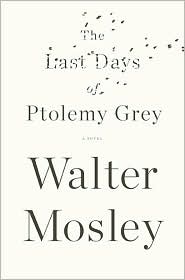
#BookReview: The Last Days of Ptolemy Grey - Walter Mosley


An old man sits patiently, lost in his own mind, waiting on someone who's never coming again. The Last Days of Ptolemy Grey is the story of a 91 year old man with failing memory that has been given a brief window of time to remember all of those things that he's forgotten in over nine decades of living.

Through conversations he holds in his head, the reader is introduced to Coydog, Ptolemy's childhood mentor. It is also through these conversations that we learn of Ptolemy's deceased wife and his relationship with his previous caretaker, Reggie.

Now that Reggie has passed, Ptolemy's relatives all seem to want money from him and suspect that he's senile enough to give it to them without realizing it. Robyn, a guest of Ptolemy's niece, enters the picture and seems to want nothing from Ptolemy other than his company. The fact that she's 18 and he's 91 is rarely a factor in their platonic relationship. Robyn is simply seeking someone to care for and Ptolemy can certainly use it.

With Robyn's assistance, and also to her dismay, Ptolemy begins taking medication that returns his memory completely. Ptolemy is determined to make the most of his time and it's Robyn's job to help him complete his list of goals before that time runs out.

What did you like about this book?
Walter Mosley has such a way with words that it's a pure delight to read them. Honestly, I could probably read his grocery list and be happy. In the hands of any other author the relationship between Ptolemy and Robyn would have seemed strange, even creepy. However, Mosley writes it in such a way that it seems perfectly natural.


What didn't you like about this book?
There is a lot of switching between present day and the past without any demarcation. It got frustrating occasionally when trying to determine about whom or what the narrator was thinking.

What could be done to improve this book?
I would have liked to see an epilogue just to find out the outcome of Robyn's relationship with Ptolemy's family.


288pp
Published November 2010


Theme: I Remember by Dianne Reeves

Thursday, May 8, 2014

ICYMI: Walter Mosley & Michael Eric Dyson in Conversation

In case you missed it, Walter Mosley and Michael Eric Dyson sat down yesterday at the Schomburg Center in New York for an extended conversation.  As always, Walter was witty and warm and Michael talked a mile a minute.  If you weren't able to watch it live, you can catch it below.


Friday, May 24, 2013

10 Fun Facts About Walter Mosley & His Works

The great one came to town and I was there! This was my first time seeing him in person and I had no idea he was so funny.  He read the first chapter of his latest book, Little Green, entertained questions for about 30 minutes and autographed books.  Along the way, he dropped some interesting tidbits, some of which I've read in other interviews and some I've never heard before.

In addition to finding out about his wicked sense of humor, here's what I learned:

  1. Little Green is his only book about resurrection.
  2. He's working with Anthony Mackie on a film adaptation of The Man in My Basement.
  3. The idea for The Last Days of Ptolemy Grey came from dealing with his mother who was suffering from dementia.  Samuel Jackson is working on a movie version of the book. Ptolemy Grey will not be returning in any form.  
  4. He never uses a typewriter.
  5. His favorite character is Twill from the Leonid McGill series.
  6. The Tempest Tales is inspired by characters from Langston Hughes' Jess B. Semple series.
  7. He only works on one book at a time.
  8. He's working on a musical of Devil in a Blue Dress.
  9. He's working with Laurence Fishburne on a series based on Socrates Fortlaw.
  10. He's been drawing for 45 years and never really shares it with anyone, but will have several pictures displayed in a show in New York June through July.

Interested in hearing more and learning about that wonderful sense of humor I mentioned?  Check out the video below.  It's chock full of more fun facts and interesting tidbits.


Wednesday, September 23, 2015

#BookReview: ONLY THE STRONG by Jabari Asim

Set in the early 1970s in the fictional Gateway City he created in A Taste of Honey, Only the Strong reads like Jabari Asim’s love letter to his hometown of St. Louis. Gateway City is changing. The decay of the north side of town has already begun. Mill Creek Valley had been demolished and the promises of new housing and business developments in that area have been broken. The revolutionaries that once fought for civil rights have moved within the establishment and are now politicians. The segregated businesses of previous years have gone by the wayside and there’s even a black woman working at the lingerie counter at the local department store.

Only the Strong is centered around Guts Tolliver, former enforcer for local kingpin, Ananias Goode. Following the assassination of Martin Luther King, Jr. Guts finds that he no longer has the heart for breaking legs and killing his fellow man at the bequest of his boss. With Goode’s blessing, Guts instead spends his time running a taxi service and thinking about Pearl Jordan and banana pudding. Still, he keeps his ear to the ground, always aware of what’s going on around him, and always on the lookout for things or people that might bring harm to Goode.

Tolliver’s days start with feeding the ducks at Fairgrounds Park and catching up with the locals, like the two women that tend a memorial garden daily, and observing the quiet fisherwoman that never seems to move from her spot. Guts has just been hired to babysit Rip Crenshaw, a star player for the local baseball team, which would be easier if Rip wasn’t such a wild card. A missing ring causes more trouble than Guts is sure Rip is worth, but he promises him that it will turn up eventually and he’s a man of his word.

Guts’ interactions are often entertaining but never more so than when he’s visited by Playfair, a local booster. Playfair is a lighthearted hustle man who peddles his wares out of his car. He immediately brings to mind a charismatic Huggy Bear-like character. In addition to Playfair, there’s the cast of characters that always seems to hang around local businesses: the three gentlemen that hold court in front daily, including a man that works across the street but always seems to be at the cab stand; Nifty, a petty thief whose life Guts once spared and now uses an informant; and others in the neighborhood that stop by to chew the fat.

Dr. Artinces Noel is a model citizen. Once a quiet girl from Honey Springs, Kentucky, she’s now a respected pediatrician in Gateway City. During her tenure in the city, she’s worked her way up to the head of pediatrics at Abram Higgins Hospital. While no one bats an eye at the doctor taking in Charlotte Divine, a sullen teenage, the city would be scandalized to learn of who’s company the good doctor is keeping behind closed doors.

Most of the main characters are struggling with insecurities. As strong as he is physically, Guts can’t seem to find the wherewithal to meet the demands Pearl has placed on him. Charlotte’s abandonment as a baby has left her doubting whether or not anyone can truly care for her and she protects herself by rejecting people before they can reject her. Even Rip has problems believing that people like him and not his money or fame. Their insecurities don’t serve to make them weak characters; they’re more humanized because of them.

I could go into comparisons between Guts and other male protagonists like Walter Mosley’s Easy Rawlins or Brawley Brown or Attica Locke’s Jay Porter, but I won’t. Guts is a great character in his own right and there are really no comparisons to be made. As I read about him cruising down Natural Bridge or Delmar, crossing over Vandeventer or venturing across the bridge, while listening to the Man in the Red Vest, I couldn’t stop thinking about his next adventure in the Gateway City streets. Asim has created all of these great characters that have stories to tell and stories I want to hear.  Yes, I have a deep affection for stories set in St. Louis, but I would venture to say that Only the Strong is one of those books that resonates with you regardless of whether or not you have a connection to the area.


288 p.
Published: May 2015

Friday, November 9, 2012

World Book Night 2013

World Book Night isn't until April 2013, but they're accepting sign ups now.  If you've never heard of it, you're not alone.  It gets a lot of publicity in the book community, but not so much outside of that.  Each year, book givers sign up to receive a copy of 20 books that they hand out to light or non-readers.  It's completely up to the giver where they distribute them.  It can be anywhere from a subway station, a school parking lot to the grocery store.

2013 books include Sandra Cisneros The House on Mango Street, Paulo Coehlo's The Alchemist, John Grisham's Playing for Pizza, Walter Mosley's Devil in a Blue Dress, Alexander McCall Smith's The No. 1 Ladies' Detective Agency, Hillary Jordan's Mudbound and Jesmyn Ward's Salvage the Bones, among others.  I didn't get to participate this year, but I'm definitely signing up for next year.

Care to join me? Sign ups are here.  You'll be asked to choose three books, why you're interested in giving them away and where you plan to do it.

If you could give away any book, not just the ones on the list, what would it be, who would you give it to and why?

Friday, June 12, 2015

FREE FOR ALL FRIDAY, June 12, 2015

Freedom to Write Lecture
Nigerian author Chimamanda Ngozi Adichie delivers the 2015 PEN World Voices Arthur Miller Freedom to Write Lecture and then participates in a Q&A with Andrew Solomon, who was recently named President of the PEN American Center.

Catch her lecture and the Q & A that follows it this Sunday, June 14 at 7:45pm EDT on C-SPAN 2.

Nnedi Okorafor announced her newest book on Twitter.


The Library of Congress just unveiled this year's poster for the National Book Festival, to be held in Washington, DC on September 5. Since it's Labor Day weekend, it's a perfect time to visit DC and stalk your favorite authors like Walter Mosley, Kwame Alexander, Ellen Oh, Ishamel Reed, Annette Gordon-Reed, Marlon James, Beverly Jenkins, Lalita Tademy and Ha Jin.

Remember how much the streets loved Omar Tyree back in the 90s? When Flyy Girl hit the shelves in 1993, it became must read lit for a whole generation of readers. Personally, I can't remember much about it other than everyone I knew loved it. I low key hold him responsible for the re-emergence of street lit. Anywho, it turns out Sanaa Lathan was a fan of the book back in the day and is working on a film adaptation. Will you check it out?


Speaking of authors that dominated the 90s...


Invisible Life will only run for six performances June 25-30 at the Apollo. If you plan to check it out, let us know!

Friday, April 30, 2010

#BookReview: Black Water Rising - Attica Locke

Move over Easy Rawlins, there's a new private eye in town and he goes by the name of Jay Porter. Set in 1980s Houston, Texas, Black Water Rising is the story of a 70s revolutionary turned attorney.  When a quiet evening out to celebrate his wife's birthday is interrupted by the disheveled appearance of a hysterical young, white woman, his quiet life takes an abrupt turn for the worse.

Believing that the young woman played a part in the death of a local man, Jay begins investigating her.  Surprise visits to his home and the strange man that's tailing him do nothing to dissuade him.  It's not until he realizes that the murder he thought he was investigating is nothing in comparison to what's really going on.  Woven into the mystery, but no less important, is the story of the pending strike by dockworkers in pursuit of equal pay and opportunities for African Americans.

At first I questioned why the book was set thirty years in the past, but upon further reading, it made perfect sense.  The backdrops of the previous Carter administration and fairly new Reagan administration play big parts of the storyline, as well as the city of Houston.

What did you like about this book?
Though the storyline could be a little overwhelming at times, it was very thought provoking.  I especially liked the main character's reflection on his involvement with the African Liberation Movement.

What did you dislike about this book?
At times the book dragged and I just wanted the author to pick up the pace. 

What could the author do to improve this book?
I would love to see a series with this character.  Because this book is set in the 80s, there is an opportunity to further develop the character over time, much in the same way that Walter Mosley has done with Easy Rawlins.


448pp
Published June 2009

Wednesday, June 8, 2011

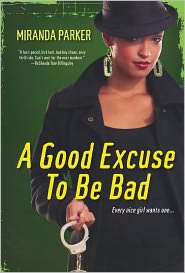
An Interview with Miranda Parker, author of A Good Excuse to be Bad


1.  When and why did you begin writing?
Unlike most authors I didn’t think I was going to be a writer when I was a small child. I was an avid reader as a small child. I began reading around four-years-old. I was very curious about the world and read the dictionary, the almanac, my encyclopedias…anything I could get my hands on. I became a writer when I couldn’t find the kind of story I would like to read.

2.   Is there anything you find particularly challenging in your writing?
I participated in a year- long writing workshop hosted by Chuck Palahniuk, who wrote Fight Club. At the time I was the only woman in the group. After I completed the workshop I received a letter and a gift package from Chucky P. In the letter he told me lighten up and have fun in my writing. (I took my writing way too seriously during critique.) He stated, “Don’t write the story unless it’s fun to you, else what’s the point?” That stuck with me. When I created this story I wanted to write a story I would love to read and feel like fun while doing it. If I find myself writing a scene that seems like a chore I chunk it. Whether it’s a suspenseful or the black moment for Angel if I’m not emotionally invested in that scene I know it will be a waste to a reader. So my challenge has been how to tell the tough part of my stories in a way that entertains me. After all, I am the first reader of my books.

3. What inspired you to write your first book?
I covered a story about eight years ago for a newspaper I once wrote for, but we had to kill it.  It was too sensational for our core readers and some advertisers had relationships with some of the parties that were the focus of the story. Yet, I couldn’t let it go. 
So a few years ago while workshopping another novel about a hot missionary’s return to the states I began thinking about this story. How can I build a readtastic story around it? I needed an antihero that my missionary couldn’t help but fall hard for and keep her on her toes. Angel was created.

4. How much of the book is realistic?
I questioned local bounty hunters in this state and DeKalb County Police about the probability of events in the story and how the bail bonds process works here. I wrote a few articles years ago about the IRS’ investigation of two Atlanta megachurches and the rise of Armor Bearers as security forces in nondenominational megachurches. These stories became the background I needed to flesh out my story. Moreover, I am a twin, so that didn’t require special research.

5.  What books have most influenced your life most?
Thomas Hardy’s Tess of the d’Ubbervilles, Alice Walker’s Color Purple, Walter Mosley’s Devil in a Blue Dress, Jane Austen’s Pride and Prejudice, and Chuck Palahniuk’s Fight Club

6.    If you had to choose, which writer would you consider a mentor? 
As I mentioned earlier I took a year-long writing workshop with Chuck Palahniuk, so I consider him a writing mentor. However, I’ve been blessed to have some great writers on my speed dial when I needed encouragement, a line edit, and an introduction to an agent or publisher. I speak about them in the acknowledgments of A Good Excuse to Be Bad. In short some of them are:  Reshonda Tate Billingsley, Creston Mapes, and Sharon Ewell Foster.  

7.  What book are you reading now? 
I’m reading Shana Burton’s Catt Chasin and Jane Eyre.

8.   What are your current projects?
I am editing the sequel Someone Bad and Something Blue (releases July 2012) and writing the first draft of the third novel in the series. 

9.  Can you share a little of your current work with us?
A Good Excuse to Be Bad has a groove that is a throwback to my favorite romantic suspense television series like Moonlighting and Remington Steele with a new kind of hero, a kick butt woman lead who is grounded because she’s a young mom.  Most of my favorite television shows (Castle, The Closer, Rizzoli & Isles) have great heroines, but none of them are moms. Therefore, Angel Crawford’s story is unique, because she’s put in a rock and a hard place position. She needs to find her brother-in-laws murderer, make sure her overly dramatic twin sister not take the fall for the murder, keep from falling in love with her pastor who wants to tagalong on her hunt, and prepare her daughter for Kindergarten at the same time. Can she do it all is what makes the book exciting. 

10.   What was the hardest part of writing your book?
The hardest part of writing my book is trying to keep the reader guessing until the end and at the same time leaving hints so that when the reader gets to the end they want to read it over again, because although they are surprised they can now see it. I want my readers to ask themselves, “Oh, why didn’t I miss that?” 

11.  Do you have any advice for other writers?
 Begin now on creating a writing discipline. Once you become published you’re expected to produce a novel length work every year, while promoting one book, and editing another. So require some discipline now, so that you won’t become overwhelmed and you can meet your editor’s deadline. I’m speaking from experience. In the past year my home was broken into, my laptop-which housed book2—was stolen, had to rewrite from scratch once I got a new laptop, then mom was diagnosed with cancer, twin brother expecting first baby, father ill, took care ofmom, I became sick after taking care of her, niece was born, I got sicker…had to ask for an extension. Trust me my case isn’t extraordinary. Every published author has a good excuse, but having a writing discipline gets you threw it. My writing discipline now is 1000 words a day, which is the equivalent of four pages or in one scene and a sequel.


12.   Do you have anything specific that you want to say to your readers?
I love reader feedback and would love for you to help me write the third book in the series. Email me at mparkerbooks@gmail.com and if chosen you will get casted in the third novel. 

Friday, June 10, 2016

New Books Coming Your Way, June 14, 2016

Charcoal Joe: An Easy Rawlins Mystery by Walter Mosley
320 p. (Fiction; mystery)

Picking up where his last adventures in Rose Gold left off in L.A. in the late 1960s, Ezekiel “Easy” Rawlins finds his life in transition. He’s ready—finally—to propose to his girlfriend, Bonnie Shay, and start a life together. And he’s taken the money he got from the Rose Gold case and, together with two partners, Saul Lynx and Tinsford “Whisper” Natly, has started a new detective agency. But, inevitably, a case gets in the way: Easy’s friend Mouse introduces him to Rufus Tyler, a very old man everyone calls Charcoal Joe. Joe’s friend’s son, Seymour (young, bright, top of his class in physics at Stanford), has been arrested and charged with the murder of a white man from Redondo Beach. Joe tells Easy he will pay and pay well to see this young man exonerated, but seeing as how Seymour literally was found standing over the man’s dead body at his cabin home, and considering the racially charged motives seemingly behind the murder, that might prove to be a tall order.

Between his new company, a heart that should be broken but is not, a whole raft of new bad guys on his tail, and a bad odor that surrounds Charcoal Joe, Easy has his hands full, his horizons askew, and his life in shambles around his feet.

Purchase: Amazon | B & N | Book Depository | IndieBound

The House of Hidden Mothers by Meera Syal
432 p. (Fiction; India)

Shyama, a forty-eight-year-old London divorcée, already has an unruly teenage daughter, but that doesn't stop her and her younger lover, Toby, from wanting a child together. Their relationship may look like a cliché, but despite the news from her doctor that she no longer has any viable eggs, Shyama's not ready to give up on their dream of having a baby. So they decide to find an Indian surrogate to carry their child, which is how they meet Mala, a young woman trapped in an oppressive marriage in a small Indian town from which she's desperate to escape. But as the pregnancy progresses, they discover that their simple arrangement may be far more complicated than it seems.

Purchase: Amazon | B & N | Book Depository | IndieBound

Every Little Step: My Story by Bobby Brown
336 p. (Non-fiction; autobiography

Bobby Brown has been one of the most compelling American artists of the past 30 years, a magnetic and talented figure who successfully crossed over many musical genres, including R&B and hip hop, as well as the mainstream. In the late 1980s, the former front man of New Edition had a wildly successful solo career—especially with the launch of Don't Be Cruel—garnering multiple hits on the Billboard top ten list, as well as several Grammy, American Music, and Soul Train awards. But Brown put his career on hold to be with the woman he loved—American music royalty Whitney Houston. The marriage between Brown and Houston was perhaps the most closely watched and talked about marriage of the 1990s—a pairing that obsessed the public and the gossip industry. Now, for the first time, the world will be able to hear the truth from the mouth of America’s “bad boy” himself. Raw and powerful, Every Little Step is the story of a man who has been on the top of the mountain and in the depths of the valley and who is now finally ready to talk about his career and family life, from the passion and the excess to his creative inspirations and massive musical success.

Purchase: Amazon | B & N | Book Depository | IndieBound

Walking with the Muses: A Memoir by Pat Cleveland
352 p. (Non-fiction; autobiography)

New York in the sixties and seventies was glamorous and gritty at the same time, a place where people like Warhol, Avedon, and Halston as well their muses came to pursue their wildest ambitions, and when the well began to run dry they darted off to Paris. Though born on the very fringes of this world, Patricia Cleveland, through a combination of luck, incandescent beauty, and enviable style, soon found herself in the center of all that was creative, bohemian, and elegant. A “walking girl,” a runway fashion model whose inimitable style still turns heads on the runways of New York, Paris, Milan, and Tokyo, Cleveland was in high demand.

Ranging from the streets of New York to the jet-set beaches of Mexico, from the designer retailers of Paris to the offices of Diana Vreeland, here is Cleveland’s larger-than-life story. One minute she's in a Harlem tenement making her own clothes and dreaming of something bigger, the next she’s about to walk Halston’s show alongside fellow model Anjelica Huston. One minute she's partying with Mick Jagger and Jack Nicholson, the next she's sharing the dance floor next to a man with stark white hair, an artist the world would later know as Warhol. One moment she’s idolizing the silver screen sensation Warren Beatty, years later, she’s deciding whether to resist his considerable amorous charms. In New York, she struggles to secure her first cover of a major magazine. In Paris, she's the toast of the town. And through the whirlwind of it all, she is forever in pursuit of love, truth, and beauty.

Purchase:
Amazon | B & N | Book Depository | IndieBound

Grace by Natashia Deon
400 p. (Fiction; African-American)

For a runaway slave in the 1840s south, life on the run can be just as dangerous as life under a sadistic Massa. That’s what fifteen-year-old Naomi learns after she escapes the brutal confines of life on an Alabama plantation. Striking out on her own, she must leave behind her beloved Momma and sister Hazel and takes refuge in a Georgia brothel run by a freewheeling, gun-toting Jewish madam named Cynthia. There, amidst a revolving door of gamblers, prostitutes, and drunks, Naomi falls into a star-crossed love affair with a smooth-talking white man named Jeremy who frequents the brothel’s dice tables all too often.

The product of Naomi and Jeremy’s union is Josey, whose white skin and blonde hair mark her as different from the other slave children on the plantation. Having been taken in as an infant by a free slave named Charles, Josey has never known her mother, who was murdered at her birth. Josey soon becomes caught in the tide of history when news of the Emancipation Proclamation reaches the declining estate and a day of supposed freedom quickly turns into a day of unfathomable violence that will define Josey—and her lost mother—for years to come.

Deftly weaving together the stories of Josey and Naomi—who narrates the entire novel unable to leave her daughter alone in the land of the living—Grace is a sweeping, intergenerational saga featuring a group of outcast women during one of the most compelling eras in American history. It is a universal story of freedom, love, and motherhood, told in a dazzling and original voice set against a rich and transporting historical backdrop.

Purchase: Amazon | B & N | Book Depository | IndieBound

Invisible Man, Got the Whole World Watching: A Young Black Man's Education by Mychal Denzel Smith
240 p. (Non-fiction; African-American studies)

How do you learn to be a black man in America? For young black men today, it means coming of age during the presidency of Barack Obama. It means witnessing the deaths of Oscar Grant, Trayvon Martin, Michael Brown, Akai Gurley, and too many more. It means celebrating powerful moments of black self-determination for LeBron James, Dave Chappelle, and Frank Ocean.

In Invisible Man, Got the Whole World Watching, Mychal Denzel Smith chronicles his own personal and political education during these tumultuous years, describing his efforts to come into his own in a world that denied his humanity. Smith unapologetically upends reigning assumptions about black masculinity, rewriting the script for black manhood so that depression and anxiety aren’t considered taboo, and feminism and LGBTQ rights become part of the fight. The questions Smith asks in this book are urgent—for him, for the martyrs and the tokens, and for the Trayvons that could have been and are still waiting.

Purchase: Amazon | B & N | Book Depository | IndieBound

Hunger: A Memoir of (My) Body by Roxane Gay
320 p. (Non-fiction; memoir)

“I ate and ate and ate in the hopes that if I made myself big, my body would be safe. I buried the girl I was because she ran into all kinds of trouble. I tried to erase every memory of her, but she is still there, somewhere. . . . I was trapped in my body, one that I barely recognized or understood, but at least I was safe.”

In her phenomenally popular essays and long-running Tumblr blog, Roxane Gay has written with intimacy and sensitivity about food and body, using her own emotional and psychological struggles as a means of exploring our shared anxieties over pleasure, consumption, appearance, and health. As a woman who describes her own body as “wildly undisciplined,” Roxane understands the tension between desire and denial, between self-comfort and self-care. In Hunger, she explores her own past—including the devastating act of violence that acted as a turning point in her young life—and brings readers along on her journey to understand and ultimately save herself.

With the bracing candor, vulnerability, and power that have made her one of the most admired writers of her generation, Roxane explores what it means to learn to take care of yourself: how to feed your hungers for delicious and satisfying food, a smaller and safer body, and a body that can love and be loved—in a time when the bigger you are, the smaller your world becomes.

Purchase: Amazon | B & N | Book Depository | IndieBound
Note: The release date varies in catalogs & Goodreads. While I think it will be out June 14, it may be postponed.

Friday, February 16, 2018

New Books Coming Your Way, February 20, 2018

All the Names They Used for God by Anjali Sachdeva
272 p.; Fiction

Anjali Sachdeva’s debut collection spans centuries, continents, and a diverse set of characters but is united by each character’s epic struggle with fate: A workman in Andrew Carnegie’s steel mills is irrevocably changed by the brutal power of the furnaces; a fisherman sets sail into overfished waters and finds a secret obsession from which he can’t return; an online date ends with a frightening, inexplicable disappearance. Sachdeva has a talent for creating moving and poignant scenes, making the unexpected and surreal feel true and inevitable, and depicting how one small miracle can affect everyone in its wake.

The Undressing by Li-Young Lee
96 p.; Poetry

The Undressing is a tonic for spiritual anemia; it attempts to uncover things hidden since the dawn of the world. Short of achieving that end, these mysterious, unassuming poems investigate the human violence and dispossession increasingly prevalent around the world, as well as the horrors the poet grew up with as a child of refugees. Lee draws from disparate sources, including the Old Testament, the Dao De Jing, and the music of the Wu Tang Clan. While the ostensive subjects of these layered, impassioned poems are wide-ranging, their driving engine is a burning need to understand our collective human mission.

Secrets We Kept: Three Women of Trinidad by Krystal A. Sital
352 p.; Memoir

There, in a lush landscape of fire-petaled immortelle trees and vast plantations of coffee and cocoa, where the three hills along the southern coast act as guardians against hurricanes, Krystal A. Sital grew up idolizing her grandfather, a wealthy Hindu landowner. Years later, to escape crime and economic stagnation on the island, the family resettled in New Jersey, where Krystal’s mother works as a nanny, and the warmth of Trinidad seems a pretty yet distant memory. But when her grandfather lapses into a coma after a fall at home, the women he has terrorized for decades begin to speak, and a brutal past comes to light.

In the lyrical patois of her mother and grandmother, Krystal learns the long-held secrets of their family’s past, and what it took for her foremothers to survive and find strength in themselves. The relief of sharing their stories draws the three women closer, the music of their voices and care for one another easing the pain of memory.

Violence, a rigid ethnic and racial caste system, and a tolerance of domestic abuse—the harsh legacies of plantation slavery—permeate the history of Trinidad. On the island’s plantations, in its growing cities, and in the family’s new home in America, Secrets We Kept tells a story of ambition and cruelty, endurance and love, and most of all, the bonds among women and between generations that help them find peace with the past.

Bingo Love by Tee Franklin
88 p.; Comic/Graphic Novel

When Hazel Johnson and Mari McCray met at church bingo in 1963, it was love at first sight. Forced apart by their families and society, Hazel and Mari both married young men and had families. Decades later, now in their mid-’60s, Hazel and Mari reunite again at a church bingo hall. Realizing their love for each other is still alive, what these grandmothers do next takes absolute strength and courage.

Down the River Unto the Sea: Detective, Heal Thyself by Walter Mosley
336 p.; Fiction

Joe King Oliver was one of the NYPD's finest investigators, until, dispatched to arrest a well-heeled car thief, he is framed for assault by his enemies within the NYPD, a charge which lands him in solitary at Rikers Island.

A decade later, King is a private detective, running his agency with the help of his teenage daughter, Aja-Denise. Broken by the brutality he suffered and committed in equal measure while behind bars, his work and his daughter are the only light in his solitary life. When he receives a card in the mail from the woman who admits she was paid to frame him those years ago, King realizes that he has no choice but to take his own case: figuring out who on the force wanted him disposed of--and why.

Running in parallel with King's own quest for justice is the case of a Black radical journalist accused of killing two on-duty police officers who had been abusing their badges to traffic in drugs and women within the city's poorest neighborhoods.

Joined by Melquarth Frost, a brilliant sociopath, our hero must beat dirty cops and dirtier bankers, craven lawyers, and above all keep his daughter far from the underworld in which he works. All the while, two lives hang in the balance: King's client's, and King's own.

Eloquent Rage: A Black Feminist Discovers Her Superpower by Brittney Cooper
288 p.; Social Science

So what if it’s true that Black women are mad as hell? They have the right to be. In the Black feminist tradition of Audre Lorde, Brittney Cooper reminds us that anger is a powerful source of energy that can give us the strength to keep on fighting.

Far too often, Black women’s anger has been caricatured into an ugly and destructive force that threatens the civility and social fabric of American democracy. But Cooper shows us that there is more to the story than that. Black women’s eloquent rage is what makes Serena Williams such a powerful tennis player. It’s what makes Beyoncé’s girl power anthems resonate so hard. It’s what makes Michelle Obama an icon.

Eloquent rage keeps us all honest and accountable. It reminds women that they don’t have to settle for less. When Cooper learned of her grandmother's eloquent rage about love, sex, and marriage in an epic and hilarious front-porch confrontation, her life was changed. And it took another intervention, this time staged by one of her homegirls, to turn Brittney into the fierce feminist she is today. In Brittney Cooper’s world, neither mean girls nor fuckboys ever win. But homegirls emerge as heroes. This book argues that ultimately feminism, friendship, and faith in one's own superpowers are all we really need to turn things right side up again.


Tuesday, January 17, 2012

#BookReview: Our Man in the Dark - Rashad Harrison


It's purely coincidental that I should be reviewing this the day after the Dr. Martin Luther King Jr. holiday.  Set in 1964 Atlanta, Our Man in the Dark is the story of John Estem.  Estem is close to esteem, of which John seems to be lacking, but I'll come back to that shortly.

A bookkeeper in the Southern Christian Leadership Conference (SCLC) office, Estem is overlooked by his co-workers and antagonized by his boss, Gant., though he fancies himself a late night confidante of Dr. King.  In his life outside of the office, he desperately longs for the affection of Candy, a childhood friend who lives on the dark side.  The only surviving son of his father, he is in a constant battle to prove that he's just as much of a man as his father is and his brother, Fred, would have been.  With all of these insecurities, and low self-esteem masked by confidence, Estem is ripe for the picking when the FBI comes calling.

Not sure if his recent Cadillac purchase has brought him to their attention, John Estem is flattered when initially approached by FBI agents Mathis and Strobe.  Convinced that he is doing his part as an American to report un-American activities, he agrees to report back to them on the goings on at the SCLC office, particularly as it relates to Communism or homosexual acts. (Side note: I'm still blown away that being gay was viewed as being as bad as, or worse than, being a Communist.)  The money he receives as in informant will assist him in paying back funds he stole from the organization, which he used to purchase the new car and suits, in hopes of winning over Candy.

Far too late, John realizes he's in over his head with the FBI and Candy's notorious lover, Count.  Only time will tell if the "gimp" will have the nerve to stand up to agents Stroble and Mathis and free himself of his obligations to Count for once and all.

This really started off as a slow read for me, but that's not surprising as books written from a male point of view tend to be more difficult for me to dive into.  In John Estem, Rashad Harrison has created a character that evokes sympathy and disdain at the same time.  While you can understand some of Estem's actions, you don't necessarily condone them and may, at times, find yourself despising him.  With characters similar to those found in the Easy Rawlins or Leonid McGill series, I'd recommend this to anyone that's a fan of Walter Mosley books.

320pp
Published: November 2011


Disclaimer: Copy provided by publisher as part of TLC Book Tour.


Theme: Trouble Man by Marvin Gaye

Friday, September 8, 2017

New Books Coming Your Way, September 12, 2017

 The Twelve-Mile Straight by Eleanor Henderson
560 p.; Fiction

Cotton County, Georgia, 1930: in a house full of secrets, two babies-one light-skinned, the other dark-are born to Elma Jesup, a white sharecropper’s daughter. Accused of her rape, field hand Genus Jackson is lynched and dragged behind a truck down the Twelve-Mile Straight, the road to the nearby town. In the aftermath, the farm’s inhabitants are forced to contend with their complicity in a series of events that left a man dead and a family irrevocably fractured.

Despite the prying eyes and curious whispers of the townspeople, Elma begins to raise her babies as best as she can, under the roof of her mercurial father, Juke, and with the help of Nan, the young black housekeeper who is as close to Elma as a sister. But soon it becomes clear that the ties that bind all of them together are more intricate than any could have ever imagined. As startling revelations mount, a web of lies begins to collapse around the family, destabilizing their precarious world and forcing all to reckon with the painful truth.

 Bluebird, Bluebird by Attica Locke
320 p.; Mystery

When it comes to law and order, East Texas plays by its own rules--a fact that Darren Mathews, a black Texas Ranger, knows all too well. Deeply ambivalent about growing up black in the lone star state, he was the first in his family to get as far away from Texas as he could. Until duty called him home.

When his allegiance to his roots puts his job in jeopardy, he travels up Highway 59 to the small town of Lark, where two murders--a black lawyer from Chicago and a local white woman--have stirred up a hornet's nest of resentment. Darren must solve the crimes--and save himself in the process--before Lark's long-simmering racial fault lines erupt. A rural noir suffused with the unique music, color, and nuance of East Texas, Bluebird, Bluebird is an exhilarating, timely novel about the collision of race and justice in America.

Little Fires Everywhere by Celeste Ng
352 p.; Fiction

In Shaker Heights, a placid, progressive suburb of Cleveland, everything is meticulously planned—from the layout of the winding roads, to the colors of the houses, to the successful lives its residents will go on to lead. And no one embodies this spirit more than Elena Richardson, whose guiding principal is playing by the rules.

Enter Mia Warren- an enigmatic artist and single mother- who arrives in this idyllic bubble with her teenaged daughter Pearl, and rents a house from the Richardsons. Soon Mia and Pearl become more than tenants: all four Richardson children are drawn to the alluring mother-daughter pair. But Mia carries with her a mysterious past, and a disregard for the rules that threatens to upend this carefully ordered community.

When the Richardsons’ friends attempt to adopt a Chinese-American baby, a custody battle erupts that dramatically divides the town and puts Mia and Mrs. Richardson on opposing sides. Suspicious of Mia and her motives, Mrs. Richardson becomes determined to uncover the secrets in Mia’s past. But her obsession will come at unexpected and devastating costs to her own family—and Mia’s.

 A Beautiful Ghetto by Devin Allen
128 p.; Photography

On April 18, 2015, the city of Baltimore erupted in mass protests in response to the brutal murder of Freddie Gray by police. Devin Allen was there, and his iconic photos of the Baltimore uprising became a viral sensation.

In these stunning photographs, Allen documents the uprising as he strives to capture the life of his city and the people who live there. Each photo reveals the personality, beauty, and spirit of Baltimore and its people, as his camera complicates popular ideas about the "ghetto."

Allen's camera finds hope and beauty doing battle against a system that sows desperation and fear, and above all, resistance, to the unrelenting pressures of racism and poverty in a twenty-first-century American city.

Electric Arches by Eve L. Ewing
120 p.; Literary collection

Electric Arches is an imaginative exploration of Black girlhood and womanhood through poetry, visual art, and narrative prose.

Blending stark realism with the surreal and fantastic, Eve L. Ewing’s narrative takes us from the streets of 1990s Chicago to an unspecified future, deftly navigating the boundaries of space, time, and reality. Ewing imagines familiar figures in magical circumstances—blues legend Koko Taylor is a tall-tale hero; LeBron James travels through time and encounters his teenage self. She identifies everyday objects—hair moisturizer, a spiral notebook—as precious icons.

Her visual art is spare, playful, and poignant—a cereal box decoder ring that allows the wearer to understand what Black girls are saying; a teacher’s angry, subversive message scrawled on the chalkboard. Electric Arches invites fresh conversations about race, gender, the city, identity, and the joy and pain of growing up.

 To Funk and Die in L.A. by Nelson George
224 p.; Mystery

To Funk and Die in LA, the fourth book in the D Hunter crime-fiction series, brings the ex-bodyguard to the City of Angels on a very dark mission when his grandfather, businessman Daniel "Big Danny" Hunter, is shot dead in a drive-by. Why would someone execute a grocery store owner? D soon finds there was more to Big Danny's life than selling loaves of bread. The old man, it turns out, was deeply involved with Dr. Funk, a legendary musical innovator who has become a mysterious recluse.

Most of the novel takes place in the LA neighborhoods of Crenshaw, Koreatown, and Pico-Union--areas where black, Asian, and Latino cultures intersect away from the glamour of Hollywood--and echoes of the 1992 riots play a significant role in D's investigation. In the tradition of Raymond Chandler and Walter Mosley, D Hunter rides through the mean streets of Los Angeles seeking truth and not always finding justice.

 The Lazarus Effect by H.J. Golakai
358 p.; Mystery

Voinjama Johnson is a woman on the brink of a dark, downward spiral. Suffering from misfortunes past and present, all Vee has is her work as an investigative journalist to hang on to. Now her career, like her sanity, is under fire. A revenant haunts Vee’s steps – during her blackouts, the ghost of a strange teenage girl in a red woollen hat keeps reaching out to her. Desperate for answers, she and her new assistant Chlöe Bishop plunge into the disappearance of seventeen-year-old Jacqueline Paulsen.

As Vee and Chlöe enter the maze of a case full of dead ends, the life of their intrepid missing girl reveals a family at odds – a dead half-brother, an ambitious father running from his past and the two women he has loved and ruined, a clutch of siblings with lies in their midst. How could a young girl leave home to play tennis one bright Saturday and never be seen again, and what do the dysfunctional circle of people she knew have to hide? Every thread Vee pulls in Jacqueline’s tight weave of intrigue brings her closer to redemption and an unravelling more dangerous than she bargained for.

In compelling and witty prose, The Lazarus Effect is an evocative tale of the underbelly and otherworld of love, murder and madness in a Cape Town that visitors seldom see.

Sky Country by Christine Kitano
104 p.; Poetry

Christine Kitano's second poetry collection elicits a sense of hunger—an intense longing for home and an ache for human connection. Channeling both real and imagined immigration experiences of her own family—her grandmothers, who fled Korea and Japan; and her father, a Japanese American who was incarcerated during WWII—Kitano's ambitious poetry speaks for those who have been historically silenced and displaced.