Showing posts with label caribbean. Show all posts

Wednesday, May 11, 2016

#BookReview: THE MOTHER by Yvvette Edwards

As a mother, it has always been my fear that something would happen to my child and I wouldn't be able to reach her. Now that she's an adult, that fear is even more magnified because she lives 800 miles away. Losing her would be like losing the air I breathe. It's for that reason The Mother hit me like a ton of bricks.

Every mother's greatest nightmare is realized when Marcia Williams learns that her only child, Ryan, a sensitive 16 year old, has been murdered by another teen. Marcia's husband, Lloydie, has always been quiet and is even more so now. Mothers get caught up in the why and the how. Marcia needs to know these things. All Lloydie needs to know is that his beloved son is no more.

Conversation between Ryan's parents has all but ceased. There is still a cup of tea on her nightstand when Marcia awakens each morning, but intimacy is a thing of the past. While Marcia heads for court daily, Lloydie heads for his garden. Marcia sits through the trial of her son's killer with her sister, Lorna, and Nipa, the family liaison, but there is no Lloydie.

Marcia can pinpoint the moment when Ryan began to change. It started with Sweetie, a loud girl with an ample bosom and a street attitude. She's not the girl that Marcia would have chosen for her Ryan and perhaps that's why he was attracted to her. Had Ryan picked a demure, studious girl with braces and glasses, he might still be alive. These are the kinds of things that run through your mind after you lose someone. Would things have turned out differently if only or with whom or when or where?

Sitting in court allows Marcia to observe Tyson Manley, her son's murderer, and his family, his mother in particular. What kind of woman raises a son that can murder someone with no regret? One would be hard pressed to tell who is more smug, mother or son.  Watching Marcia trying to make sense of what has happened to her son is painful. Will a guilty verdict bring her relief? It's not likely, but perhaps some closure. And then what?

In a slight twist that might not work in any other story, Edwards throws readers for a loop. But within that twist and within that loop, there is a glimpse of joy and humanity. There is forgiveness. There is a harnessing of strength "to keep going, not just to remain alive, but to live." There is a future to which to look forward.

256 p.
Disclaimer: Copy of book received from publisher; opinions are my own.


Amazon | B & N | Book Depository | IndieBound

Wednesday, April 10, 2013

#BookReview: Through the Lens - K.M. Jackson

Mika Walters loves being a photographer. She does not, however, enjoy being an assistant to Alejandro Vega, the photographer. Mika has worked long hours for three years, putting her own dreams on the backburner.  She's finally been offered her dream job and she's sure Ale will be as happy to see her leave as she is to go.

For three years Mika has been his right hand, so why has it taken so long for Ale to realize that he feels something for her?  He's never given a thought to how his life would be without her, but Mika will always be there.  So when she drops a bombshell on him, he's not sure how to react.

Formulaic and predictable, Through the Lens is still a pretty decent read.  Even so, I would have restructured the chapter order.  When we meet Mika and Ale, they're on an isolated island for a photo shoot.  The author plunges right into their story without giving much personal background.  It's not until over halfway through the book that we're given a better sense of their history and the events that have shaped them.


194pp
Published: November 2012

Theme: Photograph by Def Leppard

Monday, March 11, 2013

#BookReview: Bird of Paradise: How I Became Latina - Raquel Cepeda #BP2W (Dominican Republic)

Globetrotting journalist Raquel Cepeda takes readers around the world from New York to the Dominican Republic to Morocco and back again in Bird of Paradise: How I Became Latina.  If ever there was a book that meets the guidelines for the Books: Passports to the World challenge, this is it.  There's a lot of information to digest within the pages, but it's well worth the read.

Born the daughter of an idealistic mother and an unaffectionate father, the young Raquel spends much of her time trying to figure out where she fits.  That applies to both her home life, which is turbulent, and, later, her school life.  Upon being sent to the Dominican Republic to be raised by her grandparents following her parent's divorce, her childhood happiness peaks.  Her mother brings her back to the States, a puzzling decision since she seems to have no use for her, where she witnesses domestic violence on a daily basis.  Eventually, Raquel is sent to her father and stepmother in New York, and they seem to have little use for her either.  Verbally abused by her father, and occasionally a victim of domestic violence, Raquel merely bides her time until she can leave for college.

While most teens seek solace in her friends and classmates, the author finds little comfort there either.  In America, there is a tendency to categorize people.  We want people to fit into a "checkable" box.  As a daughter of the diaspora, Raquel felt a kindred connection to other people of color, but for her black classmates, she was too white and for her white classmates, she was too black.  So there was a separation by skin tone and even more, a separation between those Dominican students who had been in America for a while and those who had recently emigrated.

I believe that everything happens for a reason and after reading this book, I think Cepeda does too.  Her childhood and young adult experiences eventually lead her on a journey to find out more about her family's ancestry.  While she could go the genealogical route, she's more interested in finding out where her people originated.  Yes, they ended up in the Dominican Republic, but how did they get there? What is their ethnic origin? What is the history of relations between Africa and the island? And why does she feel so drawn to una india, an Amerindian or Indigenous-American spiritual guide?

Occasionally I have a-ha moments with books, I had quite a few with Bird of Paradise.  The one that stands out most is the whitening of the country.  While Hitler was killing Jews in Europe, Rafael Trujillo was doing the same to Haitians, sanctioning the killing of 20,000 Haitians in what became known as the Parsley Massacre.  To further whiten his nation, he encouraged Europeans, those fleeing Hitler especially, to emigrate to the Dominican Republic.  Trujillo's suppression of all things African was continued by his successors up until 1996.

Another a-ha moment came as I read about the fluidity of race in the Dominican Republic.  The U.S. has long practiced the one drop rule, in which one drop of African/African-American blood means you're black. In the DR, it is the opposite.  One sixteenth of white blood means you're white.  Darker Dominicans who have attained a higher financial or social status can be deemed white as well.  Fascinating stuff indeed.

So I know I've rambled on much longer in this review than usual, but it's the perfect blend of storytelling and science.  It's a fascinating read for all of my genealogical/anthropological readers, as well as my memoir readers.  It should be noted that there are phrases sprinkled throughout in Spanish, but that shouldn't dissuade you from reading it.  Some of them are translated, others are not.  If you have a basic knowledge of any of the romance languages, you should be able to infer what is being said.


336pp
Published: March 2013
Disclaimer: Copy of book received from publisher, opinions are my own.

The Dominican Republic has long been viewed primarily as an exporter of sugar, coffee, and tobacco, but in recent years the service sector has overtaken agriculture as the economy's largest employer, due to growth in telecommunications, tourism, and free trade zones. The economy is highly dependent upon the US, the destination for more than half of exports. - CIA World Factbook
Location: Caribbean, eastern two-thirds of the island of Hispaniola, between the Caribbean Sea and the North Atlantic Ocean, east of Haiti
Size: 48,670 sq km; slightly more than twice the size of New Hampshire
Ethnic groups: Mixed 73%, white 16%, black 11%
Languages: Spanish (official)
Population: 10,088,598

Anthem: Quisqueyanos valientes

Friday, January 18, 2013

#BookReview: The Autobiography of My Mother - Jamaica Kincaid #BP2W (Dominica)

Xuela Claudette Richardson is born the daughter of a Carib woman and a Scottish/African father.  Her mother died during childbirth and the reader is reminded of this, seemingly, at least once a chapter.  The lack of a mother frames all of Xuela's thoughts and she seems to use it as an excuse for how she lives her life. Choosing not to love anyone, not even her father, Xuela comes across as a bitter and lonely individual.

While I know Jamaica Kincaid's work is hailed in certain circles, this book left me exhausted.  The repeated statement about Xuela's mother's death, her disregard and dislike for everyone around her and the supernatural undercurrent wore me out.  The author dwelled entirely too long in childhood and I eagerly anticipated her growing up and maturing.  Instead, I was treated to a rude, older version of the same character.

Initially I picked this book because I thought I might learn something of Dominican culture; however, short of the story being set in Dominica, there was little to learn of the country from the words of the author.  Since I'm obligated to read a book from a different country each week, it was too late to turn back and try another book once I was 50 pages into this one.  But given the opportunity, I would have preferred a different book.


228pp
Published: January 1997


Dominica was the last of the Caribbean islands to be colonized by Europeans due chiefly to the fierce resistance of the native Caribs. France ceded possession to Great Britain in 1763, which made the island a colony in 1805. In 1980, two years after independence, Dominica's fortunes improved when a corrupt and tyrannical administration was replaced by that of Mary Eugenia Charles, the first female prime minister in the Caribbean, who remained in office for 15 years. Some 3,000 Carib Indians still living on Dominica are the only pre-Columbian population remaining in the eastern Caribbean. - CIA World Factbook


Location: Caribbean, island between the Caribbean Sea and the North Atlantic Ocean, about half way between Puerto Rico and Trinidad and Tobago
Size: 751 sq km, slightly more than four times the size of Washington, DC
Population: 73,126
Ethnic groups: Black 86.8%, mixed 8.9%, Carib Amerindian 2.9%, white 0.8%, other 0.7%
Languages: English (official), French patois

Theme: Isle of Beauty  

Monday, November 5, 2012

I Didn't Get My Groove Back, But...

Villa Walkway, Grand Palladium Resort
Last year for my birthday, I wanted to go to Savannah.  I made plans with friends and they all fell through.  I didn't go because I didn't want to travel alone.  Instead, I spent the day at a day spa that I hope to never set foot in again, got a hair cut, had lunch with my dad and squealed with glee over gifts from the guy I was dating at the time.  Overall, it was a decent birthday, but it wasn't what I really wanted.

This year I decided that come hell or high water, I was going to Jamaica.  I mentioned it to friends, most of whom wanted to go.  I threw out dates, gave them deadlines, received assurances that they would indeed attend...and I got crickets.  Mentioned it to the guy I had been dating and he asked if I could wait until February to go.  Dude, you do understand that this is for my birthday, right? And my birthday is in October, right? So going in February kind of misses the point, right?  When it came down to deadlines, dates and what not, no one came through.  So what's a woman to do? She rolls solo.

I'll admit that I was hesitant to go by myself.  I've been to Jamaica several times, so I was already familiar with parts of the island, but I've never gone alone.  I wanted to stay some place that would allow me to do as much or as little as I wanted.  I didn't want to stay at a couples resort and stick out like a sore thumb, but I also didn't want to stay at a super family friendly place and be surrounded by kids.  I had to have a spa on site and I had to have a beach.  And I found those things and a little bit more.

Las Brisas Beach, Lucea, Jamaica
Most mornings after breakfast, I set up shop in a shady spot on the beach.  Though I tried to read, I found myself just staring at the water for hours.  Okay, I did pause to grab a drink (or two or three) from the bar.  I chitchatted with those around me.  But mostly I just sat in silence and let the stress in my shoulders slowly melt away.

I did venture off site a few times and was highly amused by first time visitors to the island.  At a local craft market, I watched naive newlyweds get suckered into buying items they'd have no need for later or "one of of kind" wood carvings that they'd surely see in another store at a lower price.  I waved off some vendors and talked with others, while answering the often asked question, "Sis, are you Jamaican?"  I still haven't figured out what triggered that question, but in my week there, I was asked that no less than three times a day.

Sunset at Rick's Cafe, Negril
I laughed at a German woman who kept staring at me at dinner one night trying to figure out where my dinner companion was, all while she looked terribly bored with whatever it was her husband was saying to her.  I gaped at a young couple arguing another night (seriously, who argues in paradise???), which resulted in him leaving the table abruptly and her chasing after him.  You know who wasn't bored and who wasn't arguing with anyone? Me.  I set my own scheduled, changed my mind without needing to run anything by anyone and had the best vacation ever.

On the shuttle back to the airport I met some twentysomethings from Wisconsin who were amazed that I'd traveled alone.  They asked for suggestions on how to do it successfully.  The following is what I shared with them.

  • Now what works for some may not work for others, but first and foremost, you have to be okay with spending time with yourself.  As an emptynester, I'm used to doing things by myself.  If you can't imagine going out to dinner or to the movies alone, a solo trip probably isn't for you.  

  • I'm an introvert by nature.  I can go a whole weekend without actually speaking to anyone.  Social media provides as much of an outlet as I need at times. Whether you're an introvert or extrovert, pick a resort that offers activities that fit your behavior.  

  • Do your research.  These ladies picked a resort based on its website.  A lot of places use stock pictures and that's exactly what their hotel did.  They were disappointed in the hotel and their area of the beach.  As a result, they'd been ready to go home long before their trip was over.  Check out sites like tripadvisor.com, where previous guests post honest reviews and pictures, before booking your hotel.  

  • And lastly, use common sense.  Don't go wandering off with someone you don't know.  You may be in paradise, but anything can happen.


I didn't miss traveling with a companion. The hours I spent on the beach, the time I spent at the spa, the peace of mind I found, I wouldn't trade it for anything in the world.  The freedom to set my own course was worth every dime I spent.  As far as getting my groove back, I'm no Stella.  It turns out I  never lost it


Thursday, September 13, 2012

#BookReview: A CUPBOARD FULL OF COATS by Yvvette Edwards

Jinx has wrapped herself in a coat of guilt and shame since her mother's passing.  Though she was only a teenager when it happened, Jinx has shouldered the blame for what took place in their house years ago.  The heavy burden on her heart has caused her to push her husband and young son away.  Believing that she deserves nothing, she lives in a world of solitude among the dead.  And then Lemon appears on her doorstep.

Initially, it's unclear why Lemon is there and that causes the story to drag just a little.  He offers no explanation, yet Jinx still welcomes him in.  As the story progresses, it becomes apparent that he's there to ease her load and, at the same time, unburden himself.  Knowing that she has blamed herself for that tragic night, he's come to absolve her.

The adult Lemon was around to witness the deterioration of the relationship between Jinx and her mother.  Their once close relationship is fractured when Joy begins to date Berris.  As Berris' closest friend, Lemon is well aware of his friend's insecurities, but that doesn't stop him from baiting him occasionally.  In fact, rather than calling them friends, I'd say they were frenemies.  Berris' badmouthing has gotten him banned from Lemon's house and Lemon covets Berris' most prized possession, Joy.

Jealousy rears its ugly head repeatedly as Jinx begins to feel pushed aside by her mother in favor of Berris.  Berris' jealousy knows no bounds and he delivers brutal blows to say with his fists what he can't say with words.  Lemon's jealousy sets in motion a chain of events that ultimately lead to the demise of the woman all three love.

As I stated before, this book started off slow with a tendency to drag.  I was tempted to put it down, but it picked up dramatically after a few chapters.  Once it got good, I was so drawn in that I stayed up late, and would have continued reading until I finished if I hadn't had to work the next day.  It was all I could do to make it to lunch so I could find out what happened next.  Edwards' style is reminiscent of Zadie Smith, a beloved author by most, but one I've never been able to really get into.  However, I thoroughly enjoyed A Cupboard Full of Coats.

Now let's talk about the cover.  In the book, whenever Joy and Berris fight, he always buys her a gorgeous coat, hence, she ends up with a cupboard full of coats.  So, in my opinion, a cover showing said coats would have been gorgeous, but I can live with the current cover.  The characters are originally from, or descendants of, Montserrat, a Caribbean island.  Many of the scenes are centered around food, the cooking and eating of it.  So to me, the cover shows the ingredients needed to make sorrel, a Caribbean drink, which Lemon does.
 

Not everyone agrees, but I'll let you read the book and form your own opinion.  In the meantime, what are your thoughts on Caribbean lit covers? Have you noticed an overabundance of fruit and flowers where their covers are concerned?


272pp
Published: July 2012
Disclaimer: Copy of book received from publisher as part of TLC Book Tours, opinions are my own.


Theme: Hot, Hot, Hot by Arrow

Wednesday, May 11, 2011

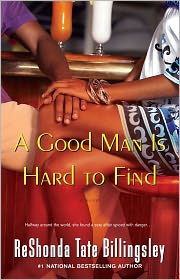
#BookReview: A Good Man is Hard to Find - ReShonda Tate Billingsley

A noted Christian lit author, ReShonda Tate Billingsley takes the leap into the chick lit/mystery genres with A Good Man is Hard to Find.  I've not read any of her Christian lit, that I can recall, so I can't say if the transition is a smooth one.  What I can say is this was an easy read, but not necessarily a memorable one.

Ava Cole has always been known as a hard-hitting journalist.  When the company she works for is bought out, she's offered a job as a writer at a tabloid.  Reluctantly she accepts and finds herself in Aruba trying to get dirt on superstar India Wright, who's just days from getting married.

As Ava digs deeper into India's fiance's background, she finds quite a few interesting details that could derail India's marriage and put Ava's life at risk.  A mystery interwoven with a love triangle, A Good Man is Hard to Find certainly holds your attention as  you read it, but you'd be hard pressed to remember what it is about a month after you read it.

What did you like about this book?
It was a quick and easy read.

What didn't you like about this book?
For some reason  Billingsley felt the need to include a younger sister for the lead character.  She added absolutely nothing to the story line and, at times, was more of a distraction than was needed.

What could the author do to improve this book?
There is potential to turn this character and her story into a series, but the author will need to dig deeper and flesh out the character.  The reader never gets to go below the surface with the lead character and so, ultimately, there's not a level of caring about her that one would find with leads in other books.


Published: March 2011
272pp


Theme: If Your Girl Only Knew by Aaliyah

Wednesday, June 23, 2010

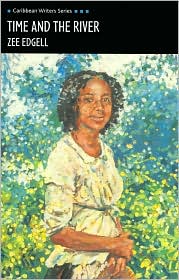
Guest Post: Time and the River by Zee Edgell

Published in 2007, Time and the River is by far the most intriguing and enlightening work by the Belizean author Zee Edgell, author of highly acclaimed novel Beka Lamb. In the literary circles of United States, the slave narrative is an established form of writing that is read and discussed in the academia as well as in the popular sphere. What makes Time and the River an amazing tour de force is the complex thematic foci mobilized to enlighten us about the nature, functioning, and consequences of the Belizean slave economy.  Based on real-life figures from Belizean history, the novels three main characters–Leah, Will, and Sharper–teach us not just the nature of human existence under oppression but also about the destructive power of slavery as an institution and its undeniable connection to the rise of early mercantile capitalism.

Leah, the main character, is probably the most complex character in the novel: she grows up as a slave and eventually, through her marriage to a slave owner, ends up inheriting more than three hundred slaves. Edgell, using court records and other archives, reconstructs for us the experiences of a female gendered subject who does earn her freedom but is not free enough to exercise her full agency as she does not free her slaves until after her death. Leah perplexes the readers as she defies our basic hope that when the oppressed are free of oppressors, they will not become oppressors themselves. But through her we learn the all-important lesson: slavery does not end simply because it is abolished or if one has gained one’s freedom. Instead, true human freedom arrives only when the structures of the material culture that underwrite slavery are altered and restructured.

Another important aspect of the novel is that it teaches us about a different kind of slavery: that of timber extraction instead of plantation slavery. The entire edifice of Belize’s colonial economy was built around the extraction and export of mahogany. The slaves were employed to locate, cut, and move the trees to the harbor for export to Europe. This mechanism involved housing slaves in forest encampments and created a hierarchy of jobs performed by the slaves: highest on this graded scale was the role of the spotters who located suitable mahogany trees in the thick forest. Thus, the slaves were not as closely monitored as their counterparts in the Caribbean cane economy or as those in the cotton fields of American south. The slaves were also free to move about in the towns and could also learn a trade and purchase their freedom. None of this implies that their experience of slavery was any less dehumanizing than that of their counterparts elsewhere.

Will and Sharper are two characters whose real historical names are used in the novel. Edgell’s reason, as shared with me in an email: “I kept the names Will and Sharper because a number of young people would know about them from one of their elementary history books, in which Will and Sharper are listed as Belizean heroes of the last known slave revolt in Belize, in 1820.” Will and Sharper also represent two different slave subjectivities: that of a captured slave and of the one who was born as a slave respectively. Will, the perpetual fighter, was captured in Africa when he was twelve and thus retains a part of his cultural memory of his free life. Throughout the novel, during all his revolts, he struggles with the loss of his cultural memory as he slowly starts forgetting the faces of his family, even that of his mother. His story then is also a personalized account of loss of a self through the process of slavery informing us what happens when a people are deracinated and thrown into a new world without any connection to their primary culture or a bank of narratives and stories essential to articulating an individual and collective identity.

On the whole,
Time and the River is a fascinating exploration of selfhood, heroism, and traumas of slavery and a fitting tribute to the resilient spirits of those who never gave up their quest for freedom no matter what the circumstances. The novel also teaches us another important lesson: slavery is not over and continues in the form of wage slavery all over the world and that like Will and Sharper, we all must come together, even when the odds are impossible, to fight oppression wherever it exists.

About the reviewer:
Author of Constructing Pakistan (Oxford UP), Dr. Masood Ashraf Raja is an Assistant Professor of Postcolonial Literature and the editor of Pakistaniaat: A Journal of Pakistan Studies. Dr. Raja can be found at http://postcoloniality.org/