Showing posts with label african-american. Show all posts

Friday, March 18, 2016

#BookReview: THE BIRDS OF OPULENCE by Crystal Wilkinson

Mother-daughter relationships can be complex. They always have been and always will be. Some mothers place their hopes and dreams in their daughters and when those daughters fall short of the mark, they bear the burden of their mother’s disappointment. Other daughters thrive and their mothers see them as competition to be cut down. Still, there are mothers that want only the best for their daughters and cheer the loudest for their accomplishments, no matter how big or small.

Mama Minnie doesn’t suffer fools, so in 1943 when her 13 year old daughter Tookie comes up pregnant, Minnie is sure it’s her fault and nothing Tookie or anyone else says is going to change her mind. Tookie births Lucy, a fragile woman that loses herself birthing Yolanda, the story’s narrator. Through Yolanda’s eyes, readers are given a front row view into the complicated relationship between Minnie and Tookie, and Lucy’s with Yolanda in the small Kentucky town of Opulence.

From the outside looking in, the Goode women are to be envied. Francine Clark knows that there is love in her neighbor’s house while she has none. A recent widow, she longs for someone or something to love. When she finds herself pregnant, she’s too happy to worry about what the women in her small town will say about her blessed event.

While Birds mostly focuses on the women in the story, Joe Brown is a strong and welcome presence. A solid man from the city, he marries Lucy and into this family of opinionated Kentucky women. He brings a sense of stability to the Goode women. Francine’s daughter, Mona, and Yolanda are best of friends, but Mona doesn’t have a Joe Brown in her home, so she seeks attention in the wrong places and from the wrong people, soaking up as much of Joe Brown’s goodness as she can when she’s visiting.

As Wilkinson takes us through the twists and turns of small town living, I was especially entranced by the Dinner on the Grounds, an annual homecoming of sorts. Everyone returns to Opulence, including Tookie’s brothers, June and Butter, men who’ve escaped Opulence and the constant gaze of Mama Minnie. She dotes on them in a way that she’s never done for Tookie. As the saying goes, mothers love their sons and raise their daughters. But these men she’s raised are greedy and their visit leaves the family at odds with each other.

Crystal Wilkinson has a way with words that will remind readers of J. California Cooper and Bernice McFadden. My only regret is that we don’t get to see enough of adult Yolanda or Kee Kee (her brother). He plays such a minor role as a child, so it’s odd that he becomes so prominent toward the end of the book. At just 208 pages, surely more of his story and his relationship with Yolanda and his wife could have been fleshed out. But overall I enjoyed this read and I’ll definitely take a glance at Wilkinson’s back catalog and catch up on her previous works.


208 p.
Published: March 2016
Disclaimer: Copy of book received from publisher, opinions are my own.

Purchase: Amazon | B & N | Book Depository | IndieBound

Friday, September 11, 2015

#BookReview: DELTA JEWELS: In Search of My Grandmother's Wisdom by Alysia Burton Steele

Synopsis: Inspired by memories of her beloved grandmother, photographer and author Alysia Burton Steele--picture editor on a Pulitzer Prize-winning team--combines heart-wrenching narrative with poignant photographs of more than 50 female church elders in the Mississippi Delta.

These ordinary women lived extraordinary lives under the harshest conditions of the Jim Crow era and during the courageous changes of the Civil Rights Movement. With the help of local pastors, Steele recorded these living witnesses to history and folk ways, and shares the significance of being a Black woman--child, daughter, sister, wife, mother, and grandmother in Mississippi--a Jewel of the Delta. From the stand Mrs. Tennie Self took for her marriage to be acknowledged in the phone book, to the life-threatening sacrifice required to vote for the first time, these 50 inspiring portraits are the faces of love and triumph that will teach readers faith and courage in difficult times.

Review: I first heard of Delta Jewels through social media.  I think there was an article retweeted or the author's tweets were retweeted into my timeline.  At the time, the author was seeking a publisher and there was no certainty that the book would even be published.  Regardless, I was excited about the book and made a note to myself to be on the lookout for it.  Eventually, the book found a home and I squealed when it showed up in the spring catalogs and immediately requested a copy from the library. (Side note: Can you "pre-order" stuff from your library before it's released too? It's great because if it's an e-book and you're "first in line," items show up on your Kindle at 11 p.m. the night before release!)  Now back to the review.

When the book finally came in, I couldn't wait to get it home and start reading.  I already knew the premise of the book and that the author had spent a significant amount of time interviewing mothers of the Mississippi Delta churches. Immediately I was swept up in the lives of these remarkable women. Just reading their stories and watching them posed for their portraits, most in their Sunday's finest, was more than enough to satisfy my soul.

I thoroughly enjoyed reading the elder's stories, but the author kept interjecting herself into the overall story instead of just letting their stories speak for themselves. I was interested in their stories, not necessarily how she came to find the elders and who introduced them to her or the literal roads she traveled to get to these women.  It just seemed like unnecessary filler and I had to keep reminding myself that the author is a photographer by trade, not a writer. I would have happily given the book a higher rating had she not been such a distraction.  Don't let that sway you from picking up Delta Jewels.  These mothers, grandmothers and great grandmothers are worthy of having their stories read.


192 p.
Published: April 2015

Wednesday, July 1, 2015

#BookReview: BLISSFUL SUMMER by Cheris Hodges & Lisa Marie Perry

Looking to add a little sizzle to your holiday weekend?  Cheris Hodges and Lisa Marie Perry are here to provide it.  The authors have collaborated to bring us two stories under one cover.  First up is Hodges' steamy, international romance, Make You Mine Again; then Perry brings the heat in international waters with the interracial romance, Unraveled.

Synopsis:
Make You Mine Again by Cheris Hodges
Supermodel Jansen Douglas is living her dream. Now a wedding in Paris is about to reunite her with the high school sweetheart she left behind. But Atlanta CEO Bradley Stephens won't let their stormy past stand in the way of reclaiming his first and only love.

Unraveled by Lisa Marie Perry
Ona Tracy's plans to seduce her high school crush unravel when the reunion trip she books turns out to be an erotic-themed cruise to the Bahamas! Rather than abandon ship, she recruits blond-haired, silver-eyed Riker Ewan to be her hookup, unaware that the hot-bodied ex-Marine isn't who he seems to be…

Review: Cheris Hodges' tale of old flames trying not to rekindle a love that's been smoldering since they separated is quite enjoyable.  Because she's dealing with characters living the lives of the rich and famous, money is no object for this writer's characters.  As readers follow Jansen from the U.S. to Paris and on to the Caribbean on her quest to escape the inevitable reunion with her ex, we can't help but to cheer for Bradley going after the woman he loves and wants.

Ona Tracy is a mess and Lisa Marie Perry knows it.  She reminds me of  the over the top theater kids from high school that are determined to make it big.  Falling extremely short of that goal, Ona is out to prove to her friends (and I use that term loosely) that she's not the failure that she appears to be.  Ona's romance with a stranger on board her cruise is a welcome distraction from her mean classmates.  The twists and turns with Riker's story line are interesting.

While Jansen and Bradley's story is more believable to me, because of their history, it's still difficult for me to fathom Ona and Riker falling so hard for each other in less than a week.  However, I suppose that that's what romance novels are all about, right?  Hoping and believing in the impossible.


224 p.
Publication date: June 2015
Disclaimer: Copy of book received from author, opinions are my own.

Wednesday, June 3, 2015

#BookReview: THE TURNER HOUSE by Angela Flournoy

I hate to compare books, especially ones that are really well written in their own right, but The Turner House reminded me of Ayana Mathis' The Twelve Tribes of Hattie. The thing that made it better, in my opinion, is that the characters are tied together. In The Twelve Tribes, even though the characters are siblings, their stories are written in such a way that they can stand alone and there's little interaction between the siblings as adults. So while we see them interact as children, once they move into the adult world, there's very little dialogue among them - standalone stories. It gives you a sense that there’s no familial bond among the siblings or even their parents. While The Turner House doesn't delve deeply into the lives of all the Turner children, Flournoy gives us a good sense of how their lives have turned out based on the adult children's whose lives she chooses to explore.

Friday, April 25, 2014

What Book Changed Your Life?

That seems like such a dramatic question, right?  Can books change lives?  Do the words on pages have the ability to start you on a new path?  I think they do and here's why.

Even though I grew up in a predominantly black city, I spent quite a bit of time in a predominantly white world.  The number of books I read with characters that looked like me was limited.  That's not because my mother didn't take me to the library or bookstore, it's because authors that looked like me may have been writing, but those books weren't readily available for various reasons.

I read the "classics" as defined by American standards and tons of young adult lit while growing up, but for every book like Mildred Taylor's Roll of Thunder, Hear My Cry, there were hundreds of books with characters that looked like Nancy Drew or the Sweet Valley High twins.  So I read them because that's what was available on the shelves.

But in college, I discovered Breaking Ice and it was everything!  There were authors I'd never heard of in all my years of private school.  Marita Golden, Gloria Naylor and so many others leaped off the pages.  I was no longer limited to the few authors that had managed to squeak through and cross over, like Maya Angelou and Alice Walker. I found myself reading stories by people that looked like me who wrote stories about my life and things I could relate to. I looked into the mirror held up by what I found in that book and liked what I saw.  I've held on to my copy for 24 years and it's as raggedy as all get out, but I still love it.  It's part of the reason why I blog, part of the reason why I seek out books by black authors, part of the reason why I'm so interested in promoting diversity in lit.

So that's my story.  What's yours?

Monday, February 24, 2014

#BookReview: Bedrock Faith by Eric Charles May

Synopsis: After fourteen years in prison, Gerald “Stew Pot” Reeves, age thirty-one, returns home to live with his mom in Parkland, a black middle-class neighborhood on Chicago’s South Side. A frightening delinquent before being sent away (his infamies included butchering a neighbor’s cat, torching another neighbor’s garage, and terrorizing the locals with a scary pit bull named Hitler), his return sends Parkland residents into a religiously infused tailspin, which only increases when Stew Pot announces that he experienced a religious awakening in prison. Most neighbors are skeptical of this claim, with one notable exception: Mrs. Motley, a widowed retiree and the Reeves’s next-door neighbor who loans Stew Pot a Bible, which is seen by Stew Pot and many in the community as a friendly gesture.

Review: If you've ever seen or heard of the 1978 film, Harper Valley PTA, you know it's about a woman in the community who's accused of raising her daughter wrong and just generally being a poor representative of womanhood.  Well Stew Pot is no one's mother, but the community around him has already passed judgement on him based on his actions as a teenager.  He spent his teens making life for the residents of Parkland a living hell.  Fourteen years, and much sooner than anyone thought they'd ever see him again, Stew Pot is back in Parkland, living with his mother.

With the exception of his mother, absolutely no one is happy to see Stew Pot back.  But this is a new and improved Stew Pot, come to right the wrongs of the past.  Now a Bible thumper, Stew Pot just wants to spread the good news, but as he's rejected by all of his wary (and rightly so) neighbors, he realizes that he needs to take some drastic measures to bring this gaggle of heathens to the Lord.

At first I thought Stew Pot was a crack pot, but as he seemed to work his way down a list extracting revenge on each and every neighbor that dared to question his sincerity and faith, I couldn't wait to find out what dirt he'd expose next.  He drives those around him crazy, so much so that they can't even pay attention to what's going on in their own homes.  By the time he's done, Stew Pot has made the old ways he used to torture neighborhood seem like the child's play that they really were.

I didn't expect to get drawn in to Bedrock Faith as much as I did, but once I got started, I could not put it down.  I couldn't wait to see what was coming next, which of the neighbor's would get their comeuppance and who would emerge as the final victor, Stew Pot or the people of Parkland.  You'll have to give this a read yourself and determine who you think is the ultimate winner.  I'd be interested in hearing who you think came out on top.


420pp
Published: March 2014
Disclaimer: Copy of book received from publisher, opinions are my own.
Pre-order your copy here.


Wednesday, September 18, 2013

#BookReview: Shake Down the Stars by Renee Swindle

Admitting that you have a problem is always the first step, right?  But if you won't admit you have a problem, even to yourself, what are others around you supposed to do?  As Piper Nelson quietly, and sometimes not so quietly, implodes, her family watches and you get the idea that most of them would prefer that she do it in private or at least out of view of the general public.

The death of her daughter left her devastated.  No one can tell anyone else how to grieve and the loss of a child is simply unimaginable.  Piper's family has moved on from the tragedy.  Her ex-husband is dealing with it in his own way.  The only person that seems to be stuck is Piper.

In a series of bad decisions, we watch as she spirals out of control, tries to find her way and stumbles a little more.  Piper's problems are only exacerbated by an emotionally distant mother and a self-absorbed sister.  Not only is Piper lacking in familial support, she's lacking in friends.  She literally has no support base.

As easy as it might be to feel sorry for Piper, you can't.  She pushes people away that try to help and she can be rude, but she's trying.  As unlikeable as she might be at times, you'll find yourself cheering for her.  The fact that she's a good person is undeniable.  She's simply someone that life has knocked down who is struggling to get back up.

I can't say enough good things about Shake Down the Stars.  Renee Swindle's writing is so good that I read it straight through and didn't stop until the last page.  If I had to compare her writing to another author, I'd say she writes in the style of a much better developed Susan Fales-Hill.  If there's one book you have to read this year, this very well may be it.


352pp
Published: August 2013

 
Theme: Like A Star by Corinne Bailey Rae

Monday, September 9, 2013

#BookReview: WHAT THE RIVER WASHED AWAY by Muriel Macleod

The first thing everyone notices about What the River Washed Away is the cover.  I know when I saw it on the shelf at BEA, my first thought was, "Why are they re-issuing The Darkest Child?"  The advance copy of the book noted that this was not the final cover, so I thought, well then they'll change it, because if I noticed it, others will.  And you all did.  I had at least five people ask me on Goodreads if it wasn't the same cover as Delores Phillips' acclaimed novel.  Apparently, the publisher decided to stick with the cover.  It has been almost 10 years since The Darkest Child was published, but they must not know that readers have minds like elephants.  Now that we've cleared that up, let's jump into the book.

It's 1908 and eight year old Arletta lives in the backwoods of Louisiana with her Mambo, the area's voodoo queen.  With knowledge imparted on her by her own mother and generations of Mambos going back to Haiti, Mambo is drunk with power.  She's so drunk with power that she leaves Arletta alone in the cabin for hours while she's out doing God only knows what.  You see, while Mambo uses her power for good, in most instances, she also uses the power in her hips, so there's no shortage of men streaming in and out of her and Arletta's lives.  One of those men has no use for Mambo once he spots Arletta, but Mambo is too busy to notice and admonishes Arletta to keep her mouth closed, lest she become the next victim of lynching.

Years later, Arletta has moved from that cabin, forced out by Mambo and her new man, Quinn.  Looking for an education and a better life, Arletta and her best friend move in with Ms.............., an English woman who has no problem with black boarders, as long as they're Christians.  Arletta will attend however many church services she has to if it means getting her hands on Ms.            books.  Settled in and enjoying her job at the NAACP, Arletta's world is thrown into turmoil when another girl is found, hurt the same way those men hurt Arletta so many years ago.  With Nellie and Mambo's help, Arletta is going to make sure what happened to her never happens to anyone else.

I wasn't sure if I was going to like this book.  A blurb on the back says it's based on a true story.  The problem with that is, you never know if everything is true or if just parts of it are true and the author built around it or what.  I've decided for myself what parts I choose to believe are true.  I do question whether or not a white woman, from England or otherwise, would be allowed to take in Negro boarders with little to no consequences in early twentieth century Louisiana.

Overall, I really liked the book, but was just a bit confused about the dialect Macleod chose to have Arletta use.  While she spoke perfectly passable English living in the backwoods, as a child that had been taught to read and write by her grandfather, her dialect in the city reverted to that of an uneducated person at times.  I'm not sure if the author forgot mid-story what her character was capable of, but it was distracting to go from one dialect to another without warning.  There was a big twist in the book that I was not expecting at all.  Actually, there were a few.  I like that the author didn't seem to follow a set script with the story lines.  Add this one to your must read list.


288pp
Published: July 2013
Disclaimer: Copy of book received from publisher, opinions are my own.

Friday, April 5, 2013

Otherization in Lit & Life

We've had conversations before on this blog and on Twitter about readers' tendency to assume characters they're reading about are the same ethnicity as them unless the author specifically states otherwise.  There was an uproar last year when a character in Hunger Games was clearly described as having brown skin and was cast as such.  Some of mainstream (and by mainstream, I mean white) America was upset and took to Tumblr and other social media sites to complain because they thought Rue was white.  Some went so far as to say that they cried when she died in the book, but couldn't work up any emotion over her dying in the movie because, "she was just a black girl." Why would they have thought this even though the author described her?   They probably skimmed over the fact and in their mind, she looked like them.  The idea that a character or person that doesn't look like them is not what they perceive as the norm, and is somehow less than human or a different kind of human, is what I call otherization.

Columbus Short
Otherization happens not only in the literary world, but in the media and every day life.  I was reading a book this week where the author felt the need to describe a bartender as "a big black guy." His ethnicity played no part in how he served drinks.  And, in this instance, that's all he did.  The character had no lines.  His blackness didn't make the drinks taste any better.   But, for some reason, the author thought readers needed to know that a BIG black man was making drinks at a bar.

Type in "big black guy" on Google and 771,000,000 results pop up.  If you've lived as a black person in America, you already know that "big black guy" is supposed to be code for "oh my God, he was so scary and I thought he was going to kill/rape/maim me."  The reality is, more than likely, said big black guy is under 5'9" and weighs 180 lbs. soaking wet, if that much. How scary and menacing does Columbus Short (and praise God for him!) look at 5'10"?

Think I'm exaggerating the tendency to otherize people? Look at all of the instances where white people, in real life not in some book, have conveniently blamed incidents on big, black guys, only to recant their statements after the police have rounded up every black man in the area and harassed them.  Remember Susan Smith, the woman who killed her kids because they didn't fit the plans she had with a new boyfriend? She sat on national TV begging for the big, black guy that stole her children to return them.  Remember Ashley Todd?  During the 2008 presidential election, she falsely claimed that a big, black guy mugged her AND scratched a B on her face for Barack Obama.  Why did these women think they could blame their attacks on black men and not be questioned for it? Because the media and America have bought into the belief that big, black guy equals trouble.  And that's boiled over into literature.

I read to escape the every day world.  I don't read to make social statements.  When the every day BS of the world creeps into what I'm reading, it's a problem.  Now here's your homework, the next book you read, I want you to note how often characters of color have their race mentioned and whether or not it plays into the typical stereotypes (e.g., sassy black woman, submissive Asian woman, etc.).  Then I want you to note how many white characters are described by their race and/or stereotypes.  Listen the next time your friends or co-workers tell a story that involves people of color and note whether or not they mention the race of that person to describe the story and whether or not it's relevant.  I bet some of you will be surprised.  Not me.


Monday, April 1, 2013

#BookReview: Mom & Me & Mom - Maya Angelou

The average person knows that she wrote I Know Why the Caged Bird Sings or they remember her inaugural speech for President Clinton, On the Pulse of Morning. You may know her for her poetic stylings in Still I Rise or for the younger generation, as an elder in Tyler Perry movies.

Readers, I'm here to tell you that Madame Angelou has lived! I picked up her then complete collection as a freshmen in college 20 years ago and was blown away. The books shown below cover her life from the beginning with I Know Why the Caged Bird Sings (1969); the ages 17 through 19 as a single mother working as a prostitute and madam in a brothel in Gather Together in My Name (1974); Singin' and Swingin' and Gettin' Merry Like Christmas (1976) covers her marriage to a Greek sailor, her dance career (did you know she once partnered with THE Alvin Ailey), and the recording of her first album.

The Heart of A Woman (1981) reflects on her time as a member of the noted Harlem Writer's Guild; her time in Egypt and Ghana; her close friendship with Malcolm X; and raising a black man in America. All God's Children Need Traveling Shoes (1986) finds her back in the United States working as a songwriter for Roberta Flack, writing short stories and preparing for her role in Alex Haley's Roots miniseries.

In her latest, Mom & Me & Mom, she finally touches upon the backbone of her greatness.  If you're like me, you remember that in I Know Why... she mentions being raised by her grandmother in Arkansas, briefly mentioning her time in California with her mother and then jumps straight into being an adult.  There is so much that was missing and it's covered now.

With a mother like Vivian Baxter, I don't know how Maya Angelou could have been anything but great.  There's nothing like a mother's love and Vivian stood in the gap for Maya like no one else could.  The confidence she instilled in Maya at a young age and support she continued to give her throughout her life was just amazing.  Not only did she serve as a sounding board and backbone for her daughter, she served as one for her communities.  She was a truly amazing woman for her time and Maya came by her spunk honestly.

When I tell you Madam Angelou has lived a full life, she truly has. As an impressionable young woman, I was so blown away by her story. Recounting now all that she has done in the time period that's not even covered by these books is even more stunning. My hope is that you will take the time  to read all of her autobiographies and get to know and appreciate this woman who is truly an American treasure.


224pp
Published: April 2013
Disclaimer: Copy of book received from publisher, opinions are my own.

 
Theme: Tell Mama by Etta James

Wednesday, March 27, 2013

#BookReview: The Supremes at Earl's All-You-Can-Eat - Edward Kelsey Moore

Friends for over 40 years, Odette, Clarice and Barbara Jean have seen each other through everything.  From forbidden love to a cheating husband, the Supremes have been there for each other. And if one of them got out of hand, the other two were there to steer her back on course.

Unlike THE Supremes, Odette, Clarice and Barbara Jean aren’t singers. They’re just friends that happen to reside in the same small Indiana town. But Big Earl, owner of Earl’s All-You-Can-Eat diner, gave them the front window spot while they were in high school and, from there, they’ve watched over and gossiped about the comings and goings of Plainview, Indiana residents for decades.

The plainest and rowdiest of the group, Odette is a no nonsense kind of woman and always has been. If anyone knew that she had conversations with her dead mother, they’d think she was losing a few screws. If they knew that her mother’s ghost hangs out with Eleanor Roosevelt’s, they’d lock her away for sure.

As teens, Clarice’s cheating boyfriend Richmond, now her cheating husband, had a hard time finding someone to double date with because Clarice’s mother insisted she bring Odette along. But, as the saying goes, there’s a pot for every lid and James fit Odette to a tee. Clarice never would have imagined that her homely friend would wind up in a more successful marriage. She never imagined she’d be married at all.

Growing up poor, and with the skankiest mother in town, Barbara Jean vows that she’s going to have a much better life. Rescued from a future that was starting to resemble her mother’s, by the Supremes and Lester, her much older husband, Barbara Jean has been on a slippery slope for the longest. Clarice and Odette see it for what it is, but are too polite to say anything.

These were the tender considerations that came with being a member of the Supremes.We overlooked each other’s flaws and treated each other well, even when we didn’t deserve it.

When one of the Supremes becomes ill, not only is she forced to confront some truths, the others are as well. While the results may not be pretty, you can guarantee that the path they take to get there is pretty entertaining. As Sophia stated in The Color Purple, “things gone be different around here from now on.” Indeed, they are.


352pp
Published: March 2013
Disclaimer: Copy of book received from publisher, opinions are my own.
 
Theme: With a Little Help From My Friends by Ike & Tina Turner

Wednesday, February 6, 2013

#BookReview: Freeman - Leonard Pitts, Jr.

How far would you walk to be reunited with your loved one? Following the end of slavery, countless men and women set off across the country looking for mothers, fathers, husband, wives, sisters, brothers and children.  Because slaves were given the last names of their owners, it was often difficult for families to be reunited, especially if they didn't know to what plantation and where their loved ones had been sold.

Was this what they were to be now?  Once a slave people, now a wandering people, rootless and itinerant, searching for one another and for connections that used to be.  It was as if forever incomplete was the Negro's awful destiny.

When Sam Freeman sets out from Philadelphia to find the love of his life, all he knows is that when he last saw her, she was living on a plantation in Mississippi.  Unsure of whether the 15 years of no contact have softened her heart, Sam is determined to find her if it's the last thing he does.  Having lived a number of years on a plantation where the mistress taught and encouraged the slaves to read, Sam is an educated man, working at a library in the north, but such an education can be detrimental to a person that's forgotten the rules of the south.

Tilda was once a proud woman, but the years have been unkind to her.  Losing her son and her husband, then being sold to a master that treats her more like chattel than a human, has worn her down.  Even with the emancipation of slaves, she continues on with her master because she's unsure of where to go and what life holds for her.  Given a chance to run, she doesn't, and the shame eats away at her.

A daughter of white privilege, Boston and an abolitionist, Prudence Cafferty Kent plans to keep the promise she made to her father to open a school for the recently freed slaves in Buford, Mississippi.  And while that may be noble, it's also self-serving.  Prudence asks Bonnie, a free woman that has grown up with Prudence and is so close to her that they call themselves sisters, to go with her.  And this is where I began to hate Prudence.  You want to fulfill your father's mission, fine.  You want to take someone out of their comfortable environment and subject them to a life where people that look like her are treated inhumanely and expect her to just deal with it? Ma'am, tuck your privilege all the way in.

I loved, loved, LOVED Sam's story line.  I tolerated Tilda's, because though I couldn't understand why she behaved the way she did, I could empathize. But Prudence? Ugh.  She danced all over my nerves on more than one occasion.  At the same time, I applaud Pitts for adding her story line because it was certainly different from anything I've read in any other works of historical fiction set during this era.  And obviously I got over my dislike of Prudence enough to give the book five purple armchairs.


432pp
Published: May 2012

Theme: I Will Get There by Boyz II Men

Monday, January 28, 2013

#BookReview: The Man in 3B - Carl Weber

I'm not really sure when Carl Weber started to dislike women.  To be honest, I can't say for sure that he doesn't like them, but his portrayal of them in his latest is less than complimentary.  If I'm being fair, the men don't seem to do much better.  Quite frankly, there's not really one likable character in The Man in 3B.

When Daryl Graham moves into the building, the women (married, single and otherwise engaged) are quick to take notice.  While the women swoon over him, the men admire him.  It comes as a surprise then when he's found murdered.  What isn't a surprise is that the police suspect several of the residents of committing the crime.

The slightly overweight Connie has just been dumped by her furniture salesman husband.  So when Daryl starts to pay her attention and offers to help her with an exercise plan, she's more than willing to let him.  For Benny the electronics genius, Daryl is the older brother he never had.  While his fireman father is busy sleeping with the women of the building, Benny is taking his first forays into adulthood with Daryl as his guide.  Daryl is the one man Krystal never got over.  Even though she's engaged to Slim, she can't get Daryl out of her mind and when he happens to move into her building, she doesn't want to let him out of her bed.

As charming as he sounds, it's hard to imagine that everyone has a reason for wanting to see the mysterious Daryl Graham dead.  They do and now it's up to the police to sort out who killed him and why.

Though Weber's writing kept me interested enough to continue reading the book, I was taken aback by quite a few of his characters comments about women.  For example, when Ben first meets Daryl he offers him advice about the women in the building, saying:

"Take my advice when it comes to the women in this building.  Hit it and quit and don't get too attached 'cause all of em ain't nothing but a bunch of gold diggers and whores."

The usually respectful character of Bennie also speaks ill of women,

"Those damn cackling, conniving, low-life wenches on the stoop were half the reason I hadn't been out of my apartment..."

The blatant and unnecessary disrespect of women isn't limited to men though.  Even Krystal gets in on it, referring to other women as whores and belittling her stepmother, Connie, unmercifully.  As I said, the repeated verbal attacks on women made this book difficult to stomach. Some of the story lines were too unbelievable and it seemed quite convenient that some of the characters just happened to live in the same building.  While I usually like Weber's writing, and I know others will disagree, this one was just too far reaching for me and seems to be his worst work to date.


336pp
Published: January 2013
Disclosure: Copy of book received from publisher, opinions are my own.


Theme: Theme from "227"

Wednesday, December 12, 2012

#BookReview: The View from Delphi - Jonathon Odell

Set in pre-Civil Rights Mississippi, The View from Delphi is the story of Hazel and Vida, women on opposite ends of the spectrum. While one comes from a place of privilege and soon finds herself on the opposite end; the other comes from very humble beginnings, only to find herself surrounded by the material things she always dreamed of.  Unfortunately, she didn't dream beyond acquiring those possessions.

Vida Snow is the daughter of a preacher.  Her father is not just a preacher, he's the Fix It man for the sharecroppers in the area.  Raised with the Senator, Levi Snow has the ear of the biggest landowner in Delphi.  In return for Levi apprising the Senator of any grumblings among the workers, the Senator allows Levi the privilege of preaching, something Levi feels he was called to do.  As a preacher's daughter, Vida Snow has never worked a day in the fields.  Her job is to go to school and wear the pretty dresses her father keeps her in.

Hazel is poorer than dirt.  Worse than that, she's homely.  With her limp hair and plain features, she cries when she finally gets to see a picture of herself.  As a teen, she decided to do something about her looks and by the time she was fifteen, she'd completely transformed herself into a movie star-like creature, the likes of which folks in her part of Appalachia had never seen.  When she meets Floyd Graham and his big ideas, she's ready to ditch the farm and her family and get on with living.

By the time they meet, life has been unkind to Hazel and Vida.  Vida's father's fall from grace propels her into the fields.  Her longing to right the wrongs that have been done to her propels her into a white woman's kitchen.

Hazel is a woman without a plan.  Her immediate plan was to marry Floyd, but she didn't think far beyond that.  Being a mother overwhelms her.  The simplest tasks leave her flustered.  Her most recent episodes leave Floyd with no other choice than to bring in outside help to watch over her during the day to make sure she doesn't do anything foolish again.

Hazel and Vida's friendship is unlikely, and I begrudgingly call it a friendship.  I would be more apt to call it mutual respect.   Hazel draws strength from being around Vida and her group of fellow maids.  In return, Hazel assists the group with copying and distributing voting rights materials.  But are they the kind of friends that share secrets?  I wouldn't go that far.

Had I read this before the acclaimed The Healing, I don't know that I would have been inspired to read about Polly Shine.  The View from Delphi is about 100 pages longer than it needs to be.  It's obvious that by the time Odell got around to writing The Healing, he'd learned to trim the fat in his writing.  Still, it was a noble effort for a first novel.


510pp
Published: August 2005

 
Theme: Mississippi Goddamn by Nina Simone

Wednesday, October 31, 2012

#BookReview: The Floater - Sheryl Sorrentino

At the age of 46, Norma Reyes graduated with her law degree, fully expecting to be offered a spot as a first year associate at Robertson, Levine & Shemke (RLS), the firm where she'd clerked the previous summer and received such high praise.  Twenty years of working her way up to supervisor of phone operators while going to school at night have finally paid off.  And even though her ailing mother ridicules her dreams, Norma is determined to make it.

The partners at RLS have never taken Norma seriously.  Yes, she did good work in her summer position, but they would never hire an associate from a less than prestigious law school.  Norma didn't look like them and certainly wouldn't fit in with their client base, given her ethnic background. Luckily, the recession gives them an excuse when they deny her employment as an attorney. While they won't hire her as an attorney, they will hire her as a floater.  Grudgingly, Norma accepts the job, believing that it will only be temporary and that once she passes the bar, she'll be offered the position she deserves.  Poor, gullible Norma.

Weeks of being belittled by everyone from senior partners to first year associates (a group she should have been a part of) start to wear on Norma.  A chance encounter with Oscar Peterson, the mail room supervisor, makes Norma's life a little more bearable.  But their happily ever after is disrupted when Oscar gets wind of a memo about Norma, drafted by one of the senior partners.  Norma will have the fight of her life on her hand if she can get her courage up enough to do something about it.

I was torn between liking, pitying and hating Norma.  It was obvious from the beginning that dealing with her family and men had bruised her self-esteem, but she had to have guts to go back to law school at night at her age.  So while I loved that she was courageous enough to do that, I was mad that she let the attorneys mistreat and lie to her repeatedly while she accepted it.

I also vacillated between liking and disliking Oscar.  He seemed to have Norma's interests at heart, but he was so overly aggressive and insensitive at times that I kept waiting for him to break her heart like her previous boyfriends.  Even by the end of the book, I wasn't sure that she should be with him and wanted to yell out like Whoopi Goldberg in Ghost, "You in danger, girl!"  Perhaps the author didn't develop Oscar enough to make him likable or maybe it was her intent to make the reader distrust him.  Either way, I can't say that I was happy to see Norma with him.

Another thing that bothered me was how long Norma stayed with the firm, because surely working there as a floater was not the first time she witnessed the assholeness of the place.  As a clerk during the summer, she had to see the way partners treated the support staff.  Or perhaps it was okay with her then because she saw herself as one of them (attorney) instead of one of them (support staff).  Which lends itself to the question, is the mistreatment of others excusable based on their rank in the company hierarchy?  Apparently it was at RLS.


344pp
Published: August 2012
Disclaimer: Copy of book received from publisher, opinions are my own.


Theme: Do Something by Macy Grey

Monday, October 29, 2012

#BookReview: Passing Love - Jacqueline E. Luckett


Because you are to me a song,

I must not sing you over long.


Because you are to me a prayer,

I cannot say you everywhere.


Because you are to me a rose,

You will not stay when summer goes.

- Passing Love by Langston Hughes


Ruby Mae Garrett looked out for herself and made no apologies for it.  From the moment she saw Arnett Dupree, she was a woman possessed.  Actually, she was a girl possessed, but at 16, she thought she was a woman.  So when her strict mother caught wind of Ruby Mae sneaking off with the horn player, she put an end to it.  Never one to be outdone, Ruby Mae had to have the last word and the day she left her parent's house was the last day she spoke to them.

Nicole-Marie Roxane grew up loving all things French.  Her infatuation started with a small, blue French to English dictionary she found in her parent's cedar chest.  Speaking French with her father strengthened their special bond.  One day the dictionary was gone and not another word about it or French was spoken.

Fast forward to present day, 56 year old Nicole is tired of watching life pass her by. She's wasted over half of her life on a married man who still dangles the "I'll leave my wife and marry you when the time is right" carrot in front of her.  If it wasn't for her friend insisting that she go to Paris, Nicole probably would have continued to only dream of going.  But she's finally on her way to 30 days of exploring the country that's always fascinated her.

When Nicole's explorations lead to the discovery of a picture of her father in his military uniform over fifty years ago, she has to know why the picture is there, who owned it and what their connection is to her Alzheimer suffering father.  Though her mother offers little information over the phone, she does send her enough information to set Nicole off on a fact finding mission, knowing that she may not like what finds out.

As we've seen in Searching for Tina Turner, and as she again shows us in Passing Love, Jacqueline Luckett writes books about women who we rarely see as the protagonist.  As was Lena in Searching, Nicole is a woman of a certain age.  Both women feel under-valued and -appreciated by the people in their lives and set off on journeys to rediscover their self-worth and, of course, by the end of the books, they have.


306pp
Published: January 2012

Theme: April in Paris by SarahVaughan

Wednesday, July 25, 2012

#BookReview: The Healing - Jonathon Odell

I can admit when I'm late to the dance.  I've had the ARC (advanced reader's copy) of this book since October...2011.  Right, so for almost 10 months, this book just sat on my Kindle waiting for me to get around to it, but as Polly Shine would say, "I can pour water on your head, but you got to wash yourself."

Who is Polly Shine, you ask? She's the healer and giver of sight to those around her.  Things on the Satterfield plantation surely changed for the better the day Polly Shine arrived.  Prior to her arrival, Granada, the teller of The Healing, only thought she knew who she was.

Born on the same day that the mistress of the plantation's daughter died, Granada was taken from her mother and given to the mistress as a play thing.  Now normally a slave of Granada's complexion would not have been allowed to step foot in the big house.  House slaves tended to be light-skinned and were considered more favorable as their appearance was closer to white.  As the daughter of a field slave, Granada should have been out in the fields, but grief is a powerful thing and the mistress was willing to overlook the norms.

Granada takes great pleasure in dressing up in the gowns of the deceased daughter of the mistress annually for Preaching Day.  Standing at the side of the mistress in the fancy clothes and ribbons gives her such joy that she's willing to ignore the laughs and horrified looks of those around her.  Her place is firmly in the big house, next to the mistress.

All of that changes the day Polly Shine arrives.  What kind of slave is worth $ 5,000?  One that can heal.  When slaves on his plantation begin to fall ill, Ben Satterfield, who has never brought in outside slaves, brings in Polly Shine to heal them.  Not only that, he has a hospital built for her and gives her Granada as an assistant.  Of course, this doesn't sit well with Granada.  She belongs in the big house, everyone knows that.  But in becoming Polly's assistant, Granada begins to learn and remember what and who she is and to whom she belongs.

Odell touches on so many points with The Healing.  There's the constant reminder to and from house slaves that they're better than those that live in the swamps and the fields, simply because of the complexion of their skin.

 "Remember, Granada," Sylvie said, "what is bred in the bones will be in the marrow.  You ain't like them out in the swamps that got no behavior.  You been brought up around white folks and learned their manners.  Don't forget that, you hear?  You a proper house-raised girl, and you pretty as a pea, even if you is black as the bottom of a pot."

Then there's the slave mentality exhibited by Old Silas, who had been with the master since he was a boy, and resented any thought of freedom.  He even goes so far as to tell the master how to keep the other slaves in line by keeping them afraid, rendering them unable to hope.

'Mark my words,' I said, 'when a man's not afraid, then he's hoping.  And that's when all hell brakes loose.'

Odell bravely takes on a topic and time period that would normally send white authors running.  But he does so respectfully and definitely did his research.  Using words of former slaves as recorded in the WPA Slave Narratives, the Fisk Collection of Slave Narratives and oral histories of midwives as his guide, he is dedicated to telling the story accurately.  It shows in his work.


352pp
Published: February 2012

 
Theme: Time After Time by Cassandra Wilson

Wednesday, July 11, 2012

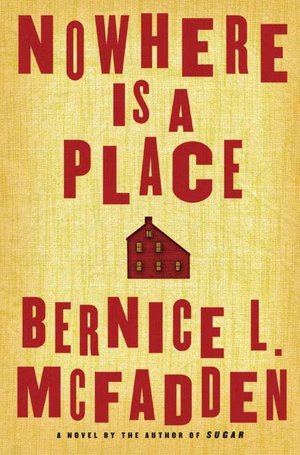
#BookReview: Nowhere is a Place - Bernice McFadden

Sherry has drifted from place to place for most of her adult life in search of something.  Though we're told initially that Sherry has spent her life wondering why her mother, Dumpling, slapped her one day, we know that there has to be a deeper reason for Sherry's restlessness.  As she and Dumpling set off on a journey from Nevada to their family reunion in Georgia, you have to believe that she'll find answers along the way.

More than just the story of one woman's wanderlust, Nowhere Is A Place is a family history, the story of how their family homestead came to be.  Told through the words of Sherry, as she imagined it from research and conversations with Dumpling, it's a journey back to slavery and to present day Georgia.  Beginning with the story of Lou, an Indian girl sold into slavery, right up to fast-tail Lilly, Dumpling's mother, who couldn't take another minute in that small town and sought the bright lights of Philadelphia, Bernice McFadden's words pull you in quickly.

One aspect of the book that I really loved was that as Dumpling was reading Sherry's words, and observing her during their long drive from Nevada to Georgia, she began to gain a better understanding of who her daughter was.  Often parents only know their children as the person they remember growing up in their house, not as an adult.  Dumpling has no idea why Sherry is the way she is or why she does the things she does until she spends time with her and gets to know the adult Sherry.  Prior to their road trip, she always thought of Sherry as her strange child or the child that didn't tell her anything about herself.  I feel like by the end of their journey, Dumpling found her to be extraordinary and learned that while Sherry had been telling her about herself all along, Dumpling hadn't necessarily been listening.

As I go back and listen to McFadden books that I've previously read, I'm reminded of works by J. California Cooper.  This book, especially, made me think of Cooper's The Wake of the Wind.  And though I enjoyed this book when I read it, the narration of  Myra Lucretia Taylor really brought it to life.


304pp
Published: February 2006
Listening time: 9 hours, 7 minutes

 
Theme: Sentimental by Alexander O'Neal

Thursday, July 5, 2012

Just Read Already: Why Huffington Post & Others Continue to Get it Wrong

It's no secret that I love books by and/or about people of color.  If you click on the header of this blog's home page, you'll shuffle through three collections of books based on genre.  Of those 18 books, only two were not written by people of color.  While my blog focuses heavily on books featuring characters of color, it does not solely.  I'm open to reading about all cultures and, hopefully, readers of this blog are too.

African Americans are as much a fabric of this country's history as anyone else.  So it's ironic that on the 4th of July, a day to celebrate America's independence, Huffington Post would release a list of  "50 Books That Every African-American Should Read."  Like bookstores and publishers, they continue to get it wrong.  I don't necessary agree that every book on this list should have made anyone's list, but I strongly disagree that this list should be limited to African Americans.  The result of lists like this is that readers that are not African American can be made to feel as if these books don't apply to them and are specifically for African Americans.  This is the same vibe they get from the segregated sections in bookstores that are labeled "African American Lit."  Sure they can venture into the section, but does that label really encourage them to?

I can honestly say that I've never seen, and I highly doubt that I will see, a list of "50 Books That Every White American Should Read."  You know why? Because that list is simply called "the classics" and everyone in America is expected to read them in their high school or college lit classes, regardless of their race or culture.  Books by and/or about white America are considered the norm.  Why not recognize that some of the books on Huffington Post's list belong on the classics list instead of continuing to segregate through literature?  Actions like this are part of the reason why some in white America grumble about things like Black History Month or the NAACP Awards.  If mainstream America recognized the contribution of African Americans as American contributions and fully integrated black history into the American history taught in schools instead of relegating it to three paragraphs, and recognized achievements of people of color overall, there would be no need for either.  By the same token, don't throw just any old book at me simply because a person of color wrote it.  Some of the books on that list had no reason for being there other than the fact that their author was African American.

As I read through the comments on Huffington Post, it would seem that most people agree that the title of the list wasn't well thought out, even though its intentions may have been good.  Perhaps the article should have been titled "50 Books by African Americans That Everyone Should Try Reading," because, ultimately, real readers want to read good books regardless of who wrote them.