Monday, January 23, 2012

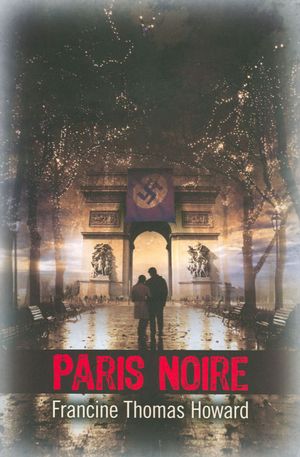
#BookReview: Paris Noire - Francine Thomas Howard


I loved the author's previous work, Page from a Tennessee Journal. I love reading about "black" Paris.  And I love historical fiction.  So when I came across Paris Noire, it seemed to have all of the elements of a great book.  Meh, it was just ok.

Marie-Therese is the mother of two, Collette and Christophe.  A native of Martinique, the mulatto Marie-Therese came to France with her children, thanks to the inheritance her father left for his illegitimate daughter and the French citizenship afforded to her by her ex-husband.

As I started Paris Noire, it seemed to me that this set up was somewhat similar to Anne Rice's The Feast of All Saints, though Feast was set in New Orleans.  However, where The Feast focused on both children, much more attention was given to Christophe than to Collette.

Collette is in love with a Frenchman that her mother opposes, though we're never really told why, other than the fact that he's French.  Since the author doesn't care to explain this or Collette's story line in depth, the reader is left to guess as to whether her relationship with him has any substance prior to her wedding announcement.

Christophe seems to be the real focus of the story.  His affair with a married waitress turns tragic as her husband returns from war.  Unfortunately, it's a tragedy that's just really uninteresting.  I didn't have enough background about him to really care if he and this woman were able to be together.

One mistake that Howard made, as I see it, is that she tried to include too many players in the game.  Marie-Therese has an American friend, Glovia, that hosts parties at her house.  Through that connection readers are given the history of blacks in Paris with stories about Bricktop, Langston Hughes, Josephine Baker, etc. during World War II.  So when Howard introduces Glovia, she introduces miscellaneous characters that attend her parties, as well as a love interest for Marie-Therese.  So we're going with that story line, right? Well not really.

We jump from Marie-Therese's story to Christophe's and begin to invest time in his story line, only to be abruptly thrown back in to Marie-Therese's.  Yes, I can read more than one thing at a time and follow several story lines, but this didn't flow very well.  It was very disjointed and really took away from the overall story.  I'd love for Howard to take another stab at this and either fully flesh out Christophe or Marie-Therese's story lines, but not both.

363pp
Published: September 2011


Theme: April in Paris by Ella Fitzgerald & Louis Armstrong

Tuesday, January 17, 2012

#BookReview: Our Man in the Dark - Rashad Harrison


It's purely coincidental that I should be reviewing this the day after the Dr. Martin Luther King Jr. holiday.  Set in 1964 Atlanta, Our Man in the Dark is the story of John Estem.  Estem is close to esteem, of which John seems to be lacking, but I'll come back to that shortly.

A bookkeeper in the Southern Christian Leadership Conference (SCLC) office, Estem is overlooked by his co-workers and antagonized by his boss, Gant., though he fancies himself a late night confidante of Dr. King.  In his life outside of the office, he desperately longs for the affection of Candy, a childhood friend who lives on the dark side.  The only surviving son of his father, he is in a constant battle to prove that he's just as much of a man as his father is and his brother, Fred, would have been.  With all of these insecurities, and low self-esteem masked by confidence, Estem is ripe for the picking when the FBI comes calling.

Not sure if his recent Cadillac purchase has brought him to their attention, John Estem is flattered when initially approached by FBI agents Mathis and Strobe.  Convinced that he is doing his part as an American to report un-American activities, he agrees to report back to them on the goings on at the SCLC office, particularly as it relates to Communism or homosexual acts. (Side note: I'm still blown away that being gay was viewed as being as bad as, or worse than, being a Communist.)  The money he receives as in informant will assist him in paying back funds he stole from the organization, which he used to purchase the new car and suits, in hopes of winning over Candy.

Far too late, John realizes he's in over his head with the FBI and Candy's notorious lover, Count.  Only time will tell if the "gimp" will have the nerve to stand up to agents Stroble and Mathis and free himself of his obligations to Count for once and all.

This really started off as a slow read for me, but that's not surprising as books written from a male point of view tend to be more difficult for me to dive into.  In John Estem, Rashad Harrison has created a character that evokes sympathy and disdain at the same time.  While you can understand some of Estem's actions, you don't necessarily condone them and may, at times, find yourself despising him.  With characters similar to those found in the Easy Rawlins or Leonid McGill series, I'd recommend this to anyone that's a fan of Walter Mosley books.

320pp
Published: November 2011


Disclaimer: Copy provided by publisher as part of TLC Book Tour.


Theme: Trouble Man by Marvin Gaye