Never one to shy away from sensitive topics, Bernice McFadden takes readers into the world of the Trokosi. In simple terms, Trokosi are girls given by their family to a deity as a sacrifice in exchange for better luck, fortune or things along those terms. Adebe Tsikata is such a girl, but she's also a survivor.
Growing up in Accra, Ghana, Adebe leads a charmed life. Her father, Kwasi, with a degree from an English university, works as a government accountant. Her mother, Lemusi, a former model, is a teacher. They lead an extremely comfortable life and Adebe is the apple of their eye.
Adebe is just as fortunate to have an aunt that adores her. Aunt Serwa spoils Adebe whenever she visits from the United States. The two share an unbreakable bond and Serwa promises that one day she'll send for Adebe to visit her in the states.
With so many people that love her, how does Adebe become Trokosi? Superstition, lack of faith and jealousy on the parts of her grandmother and father are probably the easiest explanations, but it goes farther than that. The end result, though, is that Adebe is forced from the only home she's known into an existence that bares great resemblance to hell on earth.
My Name is Butterfly is a remarkable story of surviving some of the worst circumstances known to men, rebuilding yourself and learning to survive again and again. McFadden is indeed a master storyteller.
Available in Nook & Kindle format only
Published: April 2012

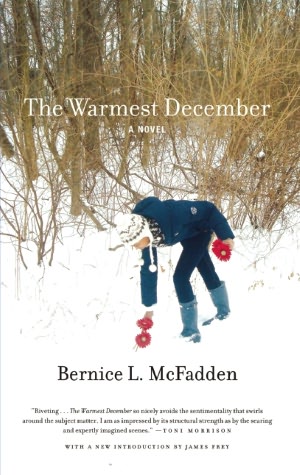
What would it take for you to go sit at the deathbed of the person that brought you the most unhappiness? As a child, Kenzie Lowe watched her father abuse her mother physically and emotionally, all the while losing his battle with alcoholism. But Kenzie's father wasn't just abusive when drinking, he was down right mean. So why does she catch buses and trudge through the snow daily to sit at his bedside as he dies?
I've said it before, but it bears repeating. Bernice McFadden sure can tell a tale. Sitting at her father, Hy-Lo's, bedside, Kenzie reminisces on her childhood and once she starts, there's no way you can put the book down until she finishes. Through her flashbacks you learn that the mother that used to protect her and her brother became an alcoholic and that Kenzie, herself, is a recovering alcoholic, continuing the cycle that started with her paternal grandmother. Hy-Lo gets his nasty spirit honestly from his mother, a woman that would turn her back on her fleeing daughter-in-law and grandchildren in their time of need.
The bright spot in Kenzie's world is her maternal grandmother. Escaping to Mable's house is a welcome respite from the verbal and emotional abuse Kenzie deals with at home, but her mother, Delia, is never strong enough to keep Hy-Lo at bay. In a way, it reminded me of people that commit suicide, but feel the need to take someone else with them. Instead of Delia recognizing and putting her children's happiness ahead of Hy-Lo's and allowing them to stay with Mable, she took them back each and every time, as if to say, "If I'm going to suffer, you're going to suffer too." It's Mable who eventually gives Kenzie the tools to escape her parents, but with an already shattered foundation, Kenzie is set up to fail and repeat the cycle herself.
One of the things I found quite interesting was that Kenzie was angry with her father, but not her mother. Her father was the abuser, but her mother was the enabler. Perhaps Kenzie had already made peace with her mother, but their conversations as adults seemed stunted, so it was difficult to tell. Of all things, The Warmest December is a story of forgiveness, not necessarily out of love, but out of a need to close a bad chapter in life so that one can move on to other things.