A visit to Philadelphia his sophomore year at Princeton, and an unlikely friendship with three Quaker brothers, starts the young man on the path to question the morality of slavery. Though he's managed to avoid facing his parents, returning home for Christmas can't be avoided. Agreeing to assist with the Underground Railroad proves to be the biggest challenge he's faced in his 19 years, especially when he finds out that his assignment places him in direct conflict with his family. With assistance from an unlikely source, Fletcher works to right the wrongs that his family has perpetuated for generations.
At just 112 pages, this is a very quick read. I received this as a gift in 1991. The detail given to characters like those that appear in other Haley novels is not as evident here. I suppose if it had been, the story would have been more memorable without re-reading it. Nonetheless, it was fairly enjoyable.
Children that talk out of turn irk me, so initially it was difficult for me to get into Mourner's Bench. Told from the point of view of 8 year old Sarah Jones, it's the story of the civil rights movements' arrival in small town Maeby, Arkansas. At the center of the movement is Sarah's mother, Esther, with whom Sarah is on a first name basis. Like I said, children that talk out of turn and don't know their place aggravate me.
Sarah is an old woman in an 8 year old's body. At a time when she should be outside playing and living carefree, she's more concerned with getting off of the mourner's bench at revival. Mind you, she put herself there, but she felt it was time, given who her mother was. For those not familiar with the mourner's bench, it's where people who've not yet been baptized but feel they're close to getting a sign that it's their time sit during church or revival. In some churches, it's believed that parents are responsible for their children's sins until they turn 13. Esther's big city ways keep her on church prayer lists all around Maeby. Figuring Esther has enough sins to carry, Sarah is determined to get her religion so she can become responsible for her own sins.
Left behind by Esther when she went off to Chicago, Sarah lives with her grandmother, Muhdea, and great-grandmother, Granny, along with a host of young cousins left behind by their parents to be raised by their older relatives. Her close relationship with Granny is a big factor in Sarah's life. Her disrespect of her mother is in part due to her relationship with Muhdea. While neither Muhdea or Granny cottons to Esther's idea of integrating the local schools, and using Sarah to do so, it's their dismissal of Esther's opinions that lead Sarah to think she can speak to her mother any kind of way.
There are enough plot twists and revelations to keep the book interesting, but there was also enough to call the story line into question. I had a hard time believing that adults would allow two 8 years to go house to house signing up black potential voters in 1960s Arkansas, especially when the threat of the local authority loomed so heavily over them. Having had grandmothers from the South, I also found it hard to believe that either of my grandmothers would have tolerated any sass that way Muhdea and Granny did, and they certainly wouldn't have encouraged me to go against my mother so blatantly. At almost 400 pages, Mourner's Bench is a decent read, but it takes far too long to get to the meat of the story. That being said, it's a decent debut novel from Faye and I'd definitely give her work another try in the future.
372 p.
Published: September 2015 Disclaimer: Copy of book received from publicist, opinions are my own.
336pp; Genre(s): Historical Fiction, African-American
Release date: January 6, 2015
The excitement in the air is palpable as the town of Montgomery, Alabama prepares for a concert by hometown boy made good, Nat King Cole. Most excited is a former classmate of Cole who shares his name, Nat Weary. Recently returned from war, Weary plans to propose to Mattie, the woman that waited for him while he was gone. When Cole is attacked on stage, Weary comes to his defense and pays the price for defending his friend from a white man, 10 years in jail.
Not one to forget his friends, especially one whose life has been put on hold for acting on his behalf, Cole offers Weary a job upon release from prison as his driver and bodyguard in Los Angeles. Weary's role offers us a behind the scenes look at Nat King Cole as he struggles to create his television show and put it and keep it on the air, no easy feat in 1956. Away from the studio, it's a treat to watch Cole interact with his close knit staff. Much like audiences of Ava DuVernay's Selma finally get to see Dr. King portrayed in a very human way, Howard offers us the same with Nat King Cole in Driving the King.
Ravi Howard touches on so many historical aspects, using Weary as a guide point. Weary's relocation to Los Angeles and his introduction to people like Almena Lomax, who runs a local Negro paper, the third in town, brings to mind those who participated in the great migration from the south to California, extensively covered in Isabel Wilkerson's The Warmth of Other Suns. In turn, Howard uses Lomax to remind readers of the Montgomery bus boycott taking place and then drives the point home when Weary returns to Montgomery for a special concert by Cole. The 10 years in jail plus the one he spent in Los Angeles brings Weary back to a town caught up in a movement. The Mattie that he so willingly let go while he was in jail has grown into an underground leader of the boycott. Life in Montgomery has gone on without him.
I loved the characters and their background stories. As I read Driving the King, it was easy to imagine the crowd and theater gathered for the first concert and the return concert 11 years later. I could see Almena Lomax approaching Weary on the sunny streets of LA. It felt like Easy Rawlins' LA and I almost wished Weary would bump into him. Ravi Howard is a solid writer and it's been far too long between 2007's Like Trees Walking and Driving the King. Let's hope he doesn't make us wait another eight years for his next book.
Okay, you know how you’re reading something and you know it’s fiction and you tell yourself something like this could never really happen, but then you start thinking, what if? That’s exactly what happened to me as I read Forty Acres. From start to finish, I didn’t want to put this book down. It was just that fascinating.
A young Queens lawyer, Martin Grey has just won the case of his life. Pulling in big money in a civil suit means he and his best friend and partner can finally stop struggling. Winning the case against a renowned attorney such as Damon Darrell is almost better than money. For so long, Martin admired the attorney with a proven track record for winning when it counted most. And he, Martin Grey, had bested him. So it comes as a surprise when Martin and his wife receive an invitation to dine at the home of Damon and his wife. Sitting in this house, smoking cigars and drinking brandy with some of the most important men in the world is mind blowing, and an invitation to join them on a weekend getaway is more than he could have hoped for. Who knew where winning just one case would lead him? Suddenly, he’s a part of a group of African American men dedicated to righting the wrongs of the past. He’s drawn to their power and the potential of wealth, but he can’t reconcile those things with what he sees on a retreat with them. I’ll admit that early on in reading this I got thrown for a loop. The author had the main character attending Spelman College for undergrad. As most of you know, Spelman is women’s college. I was a little disappointed in the author for not knowing this off the top of his head when he picked a school, and just as disappointed with his proofer and editor for not catching it either. When authors start with such blatant mistakes about something easily researched, I wonder how much effort they put into researching other areas of the book. When he saw me post about the mistake on Goodreads, Dwayne Smith actually took the time to reach out to me, apologize for his error and promised that it would be corrected in the final version. He gets major points from me for that. Aside from that error, the book is an amazing read. The words of Dr. Kasim, the group’s leader, really give you pause to think. It’s obvious that Smith is a student of history and this is shown through the speeches and background of Dr. Kasim. The men who follow him completely buy into his theories, making it easy for him to accept his actions, and it’s easy to see how they are swayed. I can’t imagine that anyone will be able to read Forty Acres and not wonder, even just a little bit, about how the world would change if the scenarios written about were to actually happen.
384pp
Published: July 2014 Disclaimer: Copy of book received from publisher, opinions are my own.
This month's featured author is Maya Angelou. I had someone else in mind, but at trivia night a few weeks ago she was the subject of one of the questions. I was amazed that my table mates didn't know more about her. The average person knows that she wrote I Know Why the Caged Bird Sings or they remember her inaugural speech for President Clinton, On the Pulse of Morning. You may know her for her poetic stylings in Still I Rise or for the younger generation, as an elder in Tyler Perry movies.
Readers, I'm here to tell you that Madame Angelou has lived! I picked up her then complete collection as a freshmen in college 20 years ago and was blown away. The books shown above cover her life from the beginning with I Know Why the Caged Bird Sings (1969); the ages 17 through 19 as a single mother working as a prostitute and madam in a brothel in Gather Together in My Name (1974); Singin' and Swingin' and Gettin' Merry Like Christmas (1976) covers her marriage to a Greek sailor, her dance career (did you know she once partnered with THE Alvin Ailey?), and the recording of her first album.
The Heart of A Woman (1981) reflects on her time as a member of the noted Harlem Writer's Guild; her time in Egypt and Ghana; her close friendship with Malcolm X; and raising a black man in America. All God's Children Need Traveling Shoes (1986) finds her back in the United States working as a songwriter for Roberta Flack, writing short stories and preparing for her role in Alex Haley's Roots miniseries.
When I tell you Madam Angelou has lived a full life, she truly has. As an impressionable young woman, I was so blown away by her story. Recounting now all that she has done in the time period that's not even covered by these books is even more stunning. My hope is that you will take the time to get to know and appreciate this woman who is truly an American treasure.
Friends for over 40 years, Odette, Clarice and Barbara Jean have seen each other through everything.From forbidden love to a cheating husband, the Supremes have been there for each other. And if one of them got out of hand, the other two were there to steer her back on course.
Unlike THE Supremes, Odette, Clarice and Barbara Jean aren’t singers. They’re just friends that happen to reside in the same small Indiana town. But Big Earl, owner of Earl’s All-You-Can-Eat diner, gave them the front window spot while they were in high school and, from there, they’ve watched over and gossiped about the comings and goings of Plainview, Indiana residents for decades.
The plainest and rowdiest of the group, Odette is a no nonsense kind of woman and always has been. If anyone knew that she had conversations with her dead mother, they’d think she was losing a few screws. If they knew that her mother’s ghost hangs out with Eleanor Roosevelt’s, they’d lock her away for sure.
As teens, Clarice’s cheating boyfriend Richmond, now her cheating husband, had a hard time finding someone to double date with because Clarice’s mother insisted she bring Odette along. But, as the saying goes, there’s a pot for every lid and James fit Odette to a tee. Clarice never would have imagined that her homely friend would wind up in a more successful marriage. She never imagined she’d be married at all.
Growing up poor, and with the skankiest mother in town, Barbara Jean vows that she’s going to have a much better life. Rescued from a future that was starting to resemble her mother’s, by the Supremes and Lester, her much older husband, Barbara Jean has been on a slippery slope for the longest. Clarice and Odette see it for what it is, but are too polite to say anything.
These were the tender considerations that came with being a member of the Supremes.We overlooked each other’s flaws and treated each other well, even when we didn’t deserve it.
When one of the Supremes becomes ill, not only is she forced to confront some truths, the others are as well. While the results may not be pretty, you can guarantee that the path they take to get there is pretty entertaining. As Sophia stated in The Color Purple, “things gone be different around here from now on.” Indeed, they are.
352pp
Published: March 2013 Disclaimer: Copy of book received from publisher, opinions are my own.
Theme: With a Little Help From My Friends by Ike & Tina Turner
Set in pre-Civil Rights Mississippi, The View from Delphi is the story of Hazel and Vida, women on opposite ends of the spectrum. While one comes from a place of privilege and soon finds herself on the opposite end; the other comes from very humble beginnings, only to find herself surrounded by the material things she always dreamed of. Unfortunately, she didn't dream beyond acquiring those possessions.
Vida Snow is the daughter of a preacher. Her father is not just a preacher, he's the Fix It man for the sharecroppers in the area. Raised with the Senator, Levi Snow has the ear of the biggest landowner in Delphi. In return for Levi apprising the Senator of any grumblings among the workers, the Senator allows Levi the privilege of preaching, something Levi feels he was called to do. As a preacher's daughter, Vida Snow has never worked a day in the fields. Her job is to go to school and wear the pretty dresses her father keeps her in.
Hazel is poorer than dirt. Worse than that, she's homely. With her limp hair and plain features, she cries when she finally gets to see a picture of herself. As a teen, she decided to do something about her looks and by the time she was fifteen, she'd completely transformed herself into a movie star-like creature, the likes of which folks in her part of Appalachia had never seen. When she meets Floyd Graham and his big ideas, she's ready to ditch the farm and her family and get on with living.
By the time they meet, life has been unkind to Hazel and Vida. Vida's father's fall from grace propels her into the fields. Her longing to right the wrongs that have been done to her propels her into a white woman's kitchen.
Hazel is a woman without a plan. Her immediate plan was to marry Floyd, but she didn't think far beyond that. Being a mother overwhelms her. The simplest tasks leave her flustered. Her most recent episodes leave Floyd with no other choice than to bring in outside help to watch over her during the day to make sure she doesn't do anything foolish again.
Hazel and Vida's friendship is unlikely, and I begrudgingly call it a friendship. I would be more apt to call it mutual respect. Hazel draws strength from being around Vida and her group of fellow maids. In return, Hazel assists the group with copying and distributing voting rights materials. But are they the kind of friends that share secrets? I wouldn't go that far.
Had I read this before the acclaimed The Healing, I don't know that I would have been inspired to read about Polly Shine. The View from Delphi is about 100 pages longer than it needs to be. It's obvious that by the time Odell got around to writing The Healing, he'd learned to trim the fat in his writing. Still, it was a noble effort for a first novel.
I can admit when I'm late to the dance. I've had the ARC (advanced reader's copy) of this book since October...2011. Right, so for almost 10 months, this book just sat on my Kindle waiting for me to get around to it, but as Polly Shine would say, "I can pour water on your head, but you got to wash yourself."
Who is Polly Shine, you ask? She's the healer and giver of sight to those around her. Things on the Satterfield plantation surely changed for the better the day Polly Shine arrived. Prior to her arrival, Granada, the teller of The Healing, only thought she knew who she was.
Born on the same day that the mistress of the plantation's daughter died, Granada was taken from her mother and given to the mistress as a play thing. Now normally a slave of Granada's complexion would not have been allowed to step foot in the big house. House slaves tended to be light-skinned and were considered more favorable as their appearance was closer to white. As the daughter of a field slave, Granada should have been out in the fields, but grief is a powerful thing and the mistress was willing to overlook the norms.
Granada takes great pleasure in dressing up in the gowns of the deceased daughter of the mistress annually for Preaching Day. Standing at the side of the mistress in the fancy clothes and ribbons gives her such joy that she's willing to ignore the laughs and horrified looks of those around her. Her place is firmly in the big house, next to the mistress.
All of that changes the day Polly Shine arrives. What kind of slave is worth $ 5,000? One that can heal. When slaves on his plantation begin to fall ill, Ben Satterfield, who has never brought in outside slaves, brings in Polly Shine to heal them. Not only that, he has a hospital built for her and gives her Granada as an assistant. Of course, this doesn't sit well with Granada. She belongs in the big house, everyone knows that. But in becoming Polly's assistant, Granada begins to learn and remember what and who she is and to whom she belongs.
Odell touches on so many points with The Healing. There's the constant reminder to and from house slaves that they're better than those that live in the swamps and the fields, simply because of the complexion of their skin.
"Remember, Granada," Sylvie said, "what is bred in the bones will be in the marrow. You ain't like them out in the swamps that got no behavior. You been brought up around white folks and learned their manners. Don't forget that, you hear? You a proper house-raised girl, and you pretty as a pea, even if you is black as the bottom of a pot."
Then there's the slave mentality exhibited by Old Silas, who had been with the master since he was a boy, and resented any thought of freedom. He even goes so far as to tell the master how to keep the other slaves in line by keeping them afraid, rendering them unable to hope.
'Mark my words,' I said, 'when a man's not afraid, then he's hoping. And that's when all hell brakes loose.'
Odell bravely takes on a topic and time period that would normally send white authors running. But he does so respectfully and definitely did his research. Using words of former slaves as recorded in the WPA Slave Narratives, the Fisk Collection of Slave Narratives and oral histories of midwives as his guide, he is dedicated to telling the story accurately. It shows in his work.
I come late to her fan club, but Chimamanda Ngozi Adichie's work is truly worthy of all the accolades it receives. In Purple Hibiscus, she skillfully combines a coming of age story with a military coup and domestic abuse. Each of these topics could have been difficult to handle, but Adichie manages to write about each of them in a way that doesn't overwhelm the reader.
Fifteen year old Kambili and her older brother, Jaja, live a good life in Enugu, Nigeria. Their father, Eugene, is a big man, meaning wealthy and well-connected, so they enjoy privileges that their classmates and friends do not. But because their father is a big man, no one suspects that he rules his family with an iron fist in the name of religion. So strict in his faith is Eugene, that has renounced his own father, who has not converted to Catholicism, and limits the children's time with him to 15 minutes during the Christmas holiday.
It's not until Kambili and Jaja get to visit their Aunt Ifeoma and cousins that they learn that everyone does not live by a daily schedule. Every aspect of their lives, from the time they wake up until they go to bed is dictated by schedules their father has created for them. In Aunt Ifeoma's house, children are encouraged to have a voice and actually use it. At home, speaking out of turn or acting independently without guidance from their father is a cause for immediate disciplinary action. In Aunt Ifeoma's home, there is laughter and open emotion, things that have been stifled in Kambili and Jaja's home.
At one point, Eugene boasts that his Kambili and Jaja are “not like those loud children people are raising these days, with no home training and no fear of God;” to which Ade Coker replies: “Imagine what the standard would be if we were all quiet.” This conversation really hit on so many things for me. The children and their mother's silence has enabled Eugene to keep them living in constant fear of his punishment, should one of them step out of line. The voices of the students and faculty at the university where Aunty Ifeoma teaches have been raised, resulting in a military coup and the persecution of those that have spoken up.
Forced to leave Nigeria as a result of the coup, Aunty Ifeoma moves to the United States to teach. Though her daughter, Amaka, always saw the U.S. as the promised land, she soon begins to believe that though times were sometimes hard in Nigeria, there was a freer sense of self and others there than in her new home.
“There has never been a power outage and hot water runs from a tap, but we don’t laugh anymore . . . because we no longer have the time to laugh, because we don’t even see one another.”
By the end of this book, I was drained. While I was hoping for a happy ending, instead I got a,, "okay, this is life, make the best of it" ending. And I'm okay with that. I just wanted better for characters that I became deeply invested in during the course of my listening.
I do have to point out that I didn't care for the narrator's voice, so I was tempted to stop listening and read the book instead. The problem I had with it is the story is told from the point of view of Kambili, a fifteen year old Igbo girl from Nigeria. The narrator was significantly older and sounded nothing like I would imagine Kambili to sound. I was so thrown by her voice that I actually looked her up. I understand that she's narrated several of the No. 1 Ladies Detective Agency books, but since I've never listened to them, I wasn't familiar with her voice. Much like I like my female characters voiced by women and not men, I like my characters to sound more like the actual character than a distinctly older person.
307pp
Listening time: 11 hours
Published: October 2003
Mr. Ali of The Marriage Bureau for Rich People is still up to his usual antics. As we saw in The Many Conditions of Love, the follow up to Marriage Bureau, the marriage bureau has taken on yet again a smaller role. Though it was the focus of the first book in the series, it now only serves as a point of reference to tie the various characters together.
Aruna, who we initially met in Marriage Bureau, is happily married. Even though her husband is a doctor and she can afford to be a housewife, she continues to work at the bureau and sends her salary to help support her parents and younger sister.
Rehman, the son of Mr. Ali, is heartbroken following his broken engagement to Usha. Her family would have preferred a son-in-law with a safe profession. Rehman tried to stay on the engineering path, but with so much unrest going on in the countryside, he feels that his talents would be put to better use by helping those less fortunate than himself.
Pari, the Ali's niece, who we met in Many Conditions is a recent widow with an adopted son. She knows that her status as a widow limits the number of men that may be willing to marry her, but she's in no rush to remarry. She agrees to think about a proposal from the handsome Dilawar, but he seems to be harboring a few secrets that could potentially end any thoughts of engagement.
When several characters in the book are kidnapped by a group of Naxalites, everyone is forced to come to grip with truths and consequences. Moving more slowly than Many Conditions, which moved much slower than Marriage Bureau, I have to wonder if Zama is running out of steam. While I can appreciate him using the books to bring awareness to social issues, I think it's time for him to explore either another series of books or different characters to get his point across. Although Marriage Bureau was hilarious, The Wedding Wallah falls painfully short.
352pp
Published: April 2011
Theme: Mauja Hi Mauja from the Jab We Met soundtrack
I worried that there would be no one to take J. California Cooper's place. I thought Bernice McFadden might be the one when I read Glorious. After reading Gathering of Waters, I'm sure of it!
I've often said that reading a J. California Cooper book is like sitting on the porch listening to your grandmother tell you a story. Using lush words and phrases that make you long for those days, McFadden's latest will leave you breathless from start to end. Once you start Gathering of Waters, you won't want to put it down until you've finished it.
Warning:When I read and write about really good books, the words I'm looking for don't always come out right. So even if you can't feel it while reading this review, know that I was gushing over the greatness of this book while writing it.
Through narration by the town of Money, Mississippi, the reader is taken on a journey that explains the evil spirit that inflicted Roy Bryant, one of the men responsible for the murder of Emmett Till. Surely one would have to be evil to harm an innocent child the way the Bryant and his accomplices did, right?
We're first introduced to the spirit, which belonged to the town's recently deceased whore, early on when it comes back in the form of a little girl. When that child's mother can no longer control the monster that her daughter has become, she sends her to live with a preacher's family where her destructive ways reach far and wide. Eventually the spirit finds its way to another innocent child, this one a white boy brought back from the dead, who would eventually become the Roy Bryant who murdered Emmett Till.
Weaving history with fiction with surrealism left me absolutely fascinated with the way the author tied the stories of each person affected by this evil spirit together and then went a step further and tied it into water. Water is used often in literature to symbolize life, transformation, chaos or a cleansing. In Gathering of Waters, water is present at each milestone: Doll's transition, Roy's re-birth, Emmett's transition, Emmett's rebirth (of sorts), and Tass' transition. The culmination of the last two events brings forth one of the most chaotic events of present time. Water...who would have thought it could wreak such havoc.
250pp Published: January (ebook)/February (paperback) 2012
It's purely coincidental that I should be reviewing this the day after the Dr. Martin Luther King Jr. holiday. Set in 1964 Atlanta, Our Man in the Dark is the story of John Estem. Estem is close to esteem, of which John seems to be lacking, but I'll come back to that shortly.
A bookkeeper in the Southern Christian Leadership Conference (SCLC) office, Estem is overlooked by his co-workers and antagonized by his boss, Gant., though he fancies himself a late night confidante of Dr. King. In his life outside of the office, he desperately longs for the affection of Candy, a childhood friend who lives on the dark side. The only surviving son of his father, he is in a constant battle to prove that he's just as much of a man as his father is and his brother, Fred, would have been. With all of these insecurities, and low self-esteem masked by confidence, Estem is ripe for the picking when the FBI comes calling.
Not sure if his recent Cadillac purchase has brought him to their attention, John Estem is flattered when initially approached by FBI agents Mathis and Strobe. Convinced that he is doing his part as an American to report un-American activities, he agrees to report back to them on the goings on at the SCLC office, particularly as it relates to Communism or homosexual acts. (Side note: I'm still blown away that being gay was viewed as being as bad as, or worse than, being a Communist.) The money he receives as in informant will assist him in paying back funds he stole from the organization, which he used to purchase the new car and suits, in hopes of winning over Candy.
Far too late, John realizes he's in over his head with the FBI and Candy's notorious lover, Count. Only time will tell if the "gimp" will have the nerve to stand up to agents Stroble and Mathis and free himself of his obligations to Count for once and all.
This really started off as a slow read for me, but that's not surprising as books written from a male point of view tend to be more difficult for me to dive into. In John Estem, Rashad Harrison has created a character that evokes sympathy and disdain at the same time. While you can understand some of Estem's actions, you don't necessarily condone them and may, at times, find yourself despising him. With characters similar to those found in the Easy Rawlins or Leonid McGill series, I'd recommend this to anyone that's a fan of Walter Mosley books.
320pp
Published: November 2011
Disclaimer: Copy provided by publisher as part of TLC Book Tour.
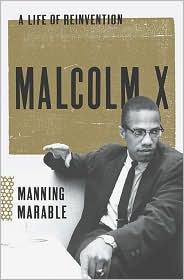
I was in elementary school in the late 1980s and early 1990s at the height of Malcolm X’s rebirth in our consciousness. I had an over sized “X” t-shirt and would steal my older cousin’s red, black and green Africa medallion to complete the outfit. I eventually found a copy of The Autobiography of Malcolm X in my house and read it so, in 1992, when Spike Lee’s biopic came out, my 9-year-old self was fully prepped.
After repeatedly reading the autobiography and viewing the movie over the years, the legend of Malcolm X was firmly ingrained in my mind. To me, he was indeed, “our shining black prince,” our dignity and honor incarnate, a martyr who laid down his life for righteousness. New insights into the life of my hero through Manning Marable’s Malcolm X: A Life of Reinvention was overdue and highly anticipated. Marable’s reputation as a premier historian and this being his life’s work made the anticipation greater. “Oh, man. This is going to be good,” I thought when I cracked open the hardcover.
Marable makes his goal abundantly clear in the prologue: he’s on a myth busting mission. Finding discrepancies in The Autobiography, Marable’s goal is to expose the truth. Using myth busting as a foundation for this work proves itself problematic throughout this book. There are times when Marable not only contradicts Malcolm’s assertions about the details of his life but also contradicts first hand accounts from Malcolm’s own family. Other times, Marable’s allegations are not supported by any evidence in the text and you are left to make a decision: do I take Manning Marable’s word for it or not?
These instances do not make up the bulk of the book but they do coincide with the more salacious revelations in the text. These instances, though off-putting, would not deter me from recommending this book to one and all. Marable does a phenomenal job of putting the events of Malcolm’s life into context. Malcolm’s black nationalism and patriarchal attitudes did not develop in a vacuum. Examining his background and the various movements of the day, allow the reader to go deeper into Malcolm’s thought process and motives. In this way, Malcolm becomes less of a myth and more of a man.
This book is invaluable for its insight into Malcolm’s relationship with the Nation of Islam. His total dedication to Elijah Muhammed is downright scary at times and puts into perspective how much the split from the NOI affected him. Marable does a great job of detailing the inner workings of the NOI. I found myself both enthralled and disgusted by the cult. Stories of their organized thuggery and the fact that Malcolm was not the first person killed for crossing them were a surprise to me.
Another invaluable aspect of this book is the detailed account of Malcolm’s travels to Africa and the Middle East. Malcolm’s reception as a dignitary everywhere he went in these regions floored me in its contrast to his treatment in Europe and the U.S. His relationship with the orthodox Muslim world and how it lead, in part, to his demise was another fascinating new detail.
Some people have charged that Marable did “the man’s” bidding in attempting to disparage Malcolm’s legacy but I came away from this book with his legacy and my love for him very much intact. Marable, having died shortly before the release of this book, is not here to defend his scholarship but I thank him for this work. Despite my misgivings about some of the allegations, this book is a shining testament of Malcolm’s depth, complexity and dedication to growth, not only for himself but also for us.
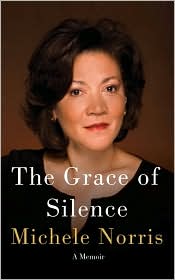
This is the book I expected when I read Condoleezza Rice's Extraordinary, Ordinary People. Where Condi failed me, Michele Norris came through with flying colors. This is truly one of those books that everyone needs to read.
What originally started as a book about post-racial America following the election of President Barack Obama turned into a discussion about race within Norris' own family. Though Norris herself was born and raised in Minnesota, which may have made for a fascinating story in and of itself, her father was from the deep south. It's his story she tells, as well as that of her maternal grandmother and other family members.
The Grace of Silence really made me reflect on the conversations I've had with my older relatives. While they touch on the fun times, rarely do they ever talk about the reasons why they left Mississippi (my mother's side) or Tennessee (my father's side). There's no mention of how they transitioned from the South to the Midwest, though some would argue that St. Louis is just the upper South. Encouraged by Norris' words, I plan to have conversations with them about growing up in segregated America and living through the Civil Rights Movement. If you haven't already, you should plan to do the same, regardless of race.
What did you like about this book?
In listening to Michele Norris narrate her book, the pride in her voice as she spoke of her parents, grandparents, etc. was so apparent. I could tell that this book was a real labor of love for her. I'm glad that she was so willing to share so much of their story.
What didn't you like about this book?
I can't think of a thing. What could the author do to improve this book?
I have no doubts that Norris' life and career are just as fascinating as the lives of her relatives. I would love to read an autobiography from her.
Listening time: 5 hours, 48 minutes
Published: September 2010
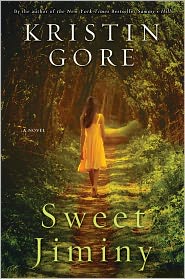
Jiminy Davis walks away from her life in law school in Chicago and finds herself in the small Mississippi town in which her grandmother, Willa, lives. She's come to get away from everything. Realizing that being attorney is not what she wants for her future, she hopes the time away will give her a chance to regroup.
Bo, the nephew of Willa's housekeeper, Lyn, has come back to Mississippi to study for his medical school entrance exams. Growing up in the south, Bo knows all too well how the rural Mississippi town expects blacks to behave. He's simply there to prepare for his exam without the distractions that he might have in a bigger city.
Years before this Jiminy was born, there was another Jiminy, Lyn's daughter. Both Lyn's husband and the first Jiminy were killed in what was called an accident, but what everyone in town knows were deliberate killings. With time on her hands and a natural curiosity, the current Jiminy is determined to find out what happened to her namesake. The problem is having only visited the south during summers as a child, Jiminy is not always aware of the ways race factors into interactions in the town. So she's shocked when she finds the previously polite townspeople reacting in unexpected ways to her questioning.
It was coincidental that I read this during the time the Investigative Discovery channel was premiering the Injustice Filesseries. If you're not familiar with it, it features cold cases from the Civil Rights era. All of the stories featured involved black men killed by members of the Klan, or those of that ilk, who have never been brought to justice for their crimes because the white citizens of their town either turned a blind eye to what was going on or actively engaged in the crimes themselves. Kristen Gore did a fine job of creating characters quite similar to the people featured in the documentaries.
What did you like about this book?
There were a few twists and turns that I didn't quite expect. Since I hate predictable books, I was pleasantly surprised by the unexpected. What didn't you like about this book?
I was going to say the second Jiminy's naivete was over the top, but after some thought I decided it really wasn't. Her experience as a white woman from a northern city played a big factor in how she saw race and race relations. So while one might have expected her to know the rules of the South, she would have really had no reason to since her earlier experiences there as a child would have been structured in such a way that her only interactions with blacks would have been her grandmother's housekeeper, Lyn.
What could the author do to improve this book?
The author introduces a Latino family that's come to Mississippi to open a restaurant while pursuing the American dream. Other than using them as a way to introduce immigration to the story line, they really serve no purpose. We already know the town is full of bigots, so giving them another group of color to intimidate is overkill. It's pretty safe to assume that someone that doesn't care for African Americans has no use for any other people of color. Their story line could have been nixed altogether.
240pp
Published: April 2011
Theme: Mercy, Mercy, Mercy by The Cannonball Adderley Quintet
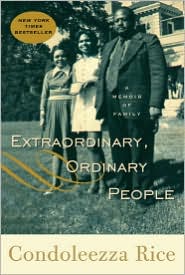
I've never really had an opinion of Condoleezza Rice before now. My daughter questioned why I picked up her audio book and the only explanation I could come up with was that she has accomplished some things that should be recognized. She has always come across as uptight, in my opinion, and I hoped that listening to her narrate her book would give me some insight into who she really was. On top of that, as someone that majored in Russian and East European Studies 20 years after she did, I felt some affinity to her.
As someone in the global intelligence and security realm, I absolutely admire Condoleezza Rice. As a person, she leaves something to be desired. I can't question that she's extremely knowledgeable in matters of foreign policy, but she's completely lacking in matters of domestic policy, particularly as it relates to those that look like her.
Raised in a Republican household, simply because the Republicans were the party willing to allow her father register as a voter, she declared herself a Democrat given the opportunity to vote for the first time. A differing of opinions with Jimmy Carter's foreign policy led her to change parties and become a fervent Republican. The line that especially stood out to me when she talked of her love of the party was, "I would rather be ignored than pandered to." I'll admit that I had to rewind that a few times to make sure I heard her right. The Republican party is not known for diversity, so to hear someone say that they're okay with being ignored by their own party really struck me as odd. But politics aside, I forged on.
In another section of the book, she speaks of attending a program at Harvard and visiting friends in the area on several occasions while in the area. When she arrives at their house before them one day, she unwittingly sets off their alarm. Her first thought of what to tell the police when they arrive is, "I'll tell them I'm the maid." What in the entire hell??? What does it say about your view of yourself and people that look like you when your immediate thought is that being black and being the maid makes sense, but being a black woman with a master's degree or a PhD doesn't?
At any rate, this book was intended to be a memoir. I came away feeling that I didn't know any more about her personally than I did before I picked it up. She didn't sound like a black woman born and raised in Birmingham during the heart of the civil rights era. She sounded like an out of touch upper class white man that couldn't relate to anyone that wasn't a part of the isolated world that can be created when one has the means to do so.
By no means am I saying that anyone of any race is obligated to reach back and help others, but as the daughter of parents that worked tirelessly to help those around them that struggled, it's shocking that none of her parent's good works seemed to rub off on her. In fact, it took her father moving to California and once again getting involved in the community for her to recognize that there were indeed people that looked like her struggling in an area in which she had lived for over ten years.
Rice chose to narrate the audio book herself and her cadence was a bit off and she was quite formal the entire time. As my daughter put it, "She sounds so unimpressed with her own life." I'd have to agree. The only times she sounded excited were when she spoke of the fall of the Berlin wall and meeting the Bushes. Everything else, including her parent's deaths, was spoken of in such a flat tone that I wouldn't be surprised if she put people to sleep while listening.
What did you like about this book?
The author's parents sounded like really good people. Perhaps a book about them and their work would have been more interesting. What didn't you like about this book?
Seriously? What could the author do to improve this book?
I mean, you can't tell someone to live better, but if she was truly writing a memoir to show people who she was and who her family was, it would have been helpful if she took down the mask and showed a human side of herself. This was less of a memoir about her family, but more about the various jobs she's held.
352pp
Published October 2010
Theme: So Appalled by Kanye West featuring Jay-Z, Swiss Beatz, The RZA, Pusha T & Prynce Cy Hi
Last summer I stumbled upon a book that I really liked by Daniel Black called They Tell Me of A Home. With The Sacred Place, the author seems to have fallen into thesophomore slump. Just as in They Tell Me of A Home, Daniel Black tackles the subject of LISWB (living in the south while black). Instead of visiting present day Mississippi, the reader is transported back to 1955.
Set during the same summer and in the same town (Money, Mississippi) where Emmett Till was murdered for whistling at a white woman, this is the fictional tale of Clement Johnson. Except it's not really fictional. One could easily read this and come to the conclusion that the author is really telling the story of what happened to Till without directly doing so.
Like Emmett Till, Clement comes down to Mississippi to visit his family for the summer. Accustomed to living in the big city, he pays no heed to the warnings that black people must behave differently in the south than up north. Walking into the general store to purchase a soda is a big deal. It's an even bigger deal when the white woman working the counter specifically asks you to place your money in her hand and instead, you place it on the counter and sass her.
It's not long before the white people in town are riled up about the new colored boy in town that doesn't know his place. When Clement comes up missing, the black people of Money, Mississippi decide that it's finally time to take a stand.
What did you like about this book?
Daniel Black is a gifted writer.
What did you dislike about this book?
The title of the book comes from a special field that is described as the closest thing to heaven on earth. It is here that members of Clement's family come to commune with the deceased. It is also the place where the author loses me. I didn't particularly care for the introduction of the supernatural aspect into what was otherwise a solid story. In addition, there is a character that is introduced for no other reason than to show the reader that not all white people in the town are racists. However, this character is an absolute loon and adds nothing to the story. In fact, he's quite distracting.
What could the author do to improve this book?
My suggestion would be to either focus on the real story or the supernatural story, but not both.
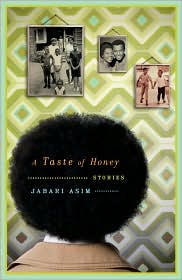
When Jabari Asim rolled through St. Louis earlier this year, I didn't attend the book signing because I hadn't yet read the book. Now I really wish I had gone just to hear him read. Billed as a set of sixteen short stories, A Taste of Honey is so much more than that. It would be impossible to tell just one story and not wonder where it leads to or how the characters in that particular story affect characters in other stories.
Set in 1967 Gateway City, residents and those familiar with St. Louis will immediately recognize street names and neighborhood distinctions sprinkled throughout. With a healthy cast of characters who could all be the main character, it is young Crispus that grabs my attention. Though all stories are told in third person, when reading this I felt as if they were being told through the eyes of this young man.
There is the story of Rose, a young woman with the voice of an angel who lives to sing at church on Sundays, but spends the rest of the week pretending that her husband isn't as bad as he seems. There's the friendship between the Reverend Washington and the notorious gangster, Ananais Goode, that no one can figure out. The neighborhood is rounded out with Guts Tolliver, the hit man with a sense of humor; Ray Mortimer, a white cop patrolling the beat; and several others that make this an absolutely delightful read.
What did you like about this book?
The author is a master of language and uses it to set the backdrop for an absolutely fascinating take on what life in St. Louis must have been like for African Americans, especially a nine year old boy.
What did you dislike about this book?
At just a little over 200 pages, I could have used a bit more.
What could the author do to improve this book?
Nothing. If J. California Cooper were to decide to stop writing tomorrow, Jabari Asims could easily step into her role as the master of the short story.
205pp
Published March 2010
Theme: People Make the World Go Round by The Stylistics